A pan can be induction-ready but not oven-safe, or oven-safe but invisible to an induction hob. Check the base first, then every handle, lid and coating before the heat goes on.
By Cookin · 26 September 2026 · 5 min read
There are two separate checks. Induction compatibility is decided mainly by the base that meets the hob. Oven safety is decided by the whole piece — pan, handles, knobs, lid, coating and any seals. A tick for one does not imply a tick for the other, so read the instructions for the exact model before buying or changing how you use it.
How induction heats a pan
An induction hob creates a changing magnetic field beneath the glass. A suitable magnetic base responds and generates heat in the cookware itself; the cooking zone is not heated in the same way as a conventional electric plate. This is why induction can respond quickly, but also why some perfectly good pans are not detected at all.
The magnet test — useful, but not the final answer
Hold an ordinary fridge magnet against the flat underside of the cookware. A firm, broad attraction is a useful sign that the base contains magnetic material.
A weak pull at one point does not prove reliable performance. The magnetic layer may be thin, uneven or too small for your hob's pan-detection area.
A magnet cannot tell you the maker's permitted power level, whether the base is flat, or whether the cookware meets the minimum diameter for a particular zone.
The induction symbol or an explicit manufacturer statement for the exact model remains the better evidence. If the marking and magnet test disagree, stop and check with the maker or retailer.
Which materials work on induction
Cast iron is magnetic and usually works on induction. Because it is heavy and can have a rough base, place it down gently and lift rather than slide it across a glass hob.
Magnetic stainless steel works. Stainless steel is a family of alloys, though, and not every grade is magnetic; an induction-ready layer may be bonded into the base.
Aluminium cookware can work when it has a suitable magnetic induction base bonded or built into it. The product description should say so explicitly.
Plain aluminium and copper are not directly induction-compatible. Glass and ceramic cookware are not either, unless the item has a suitable induction base and is specifically approved for that use.
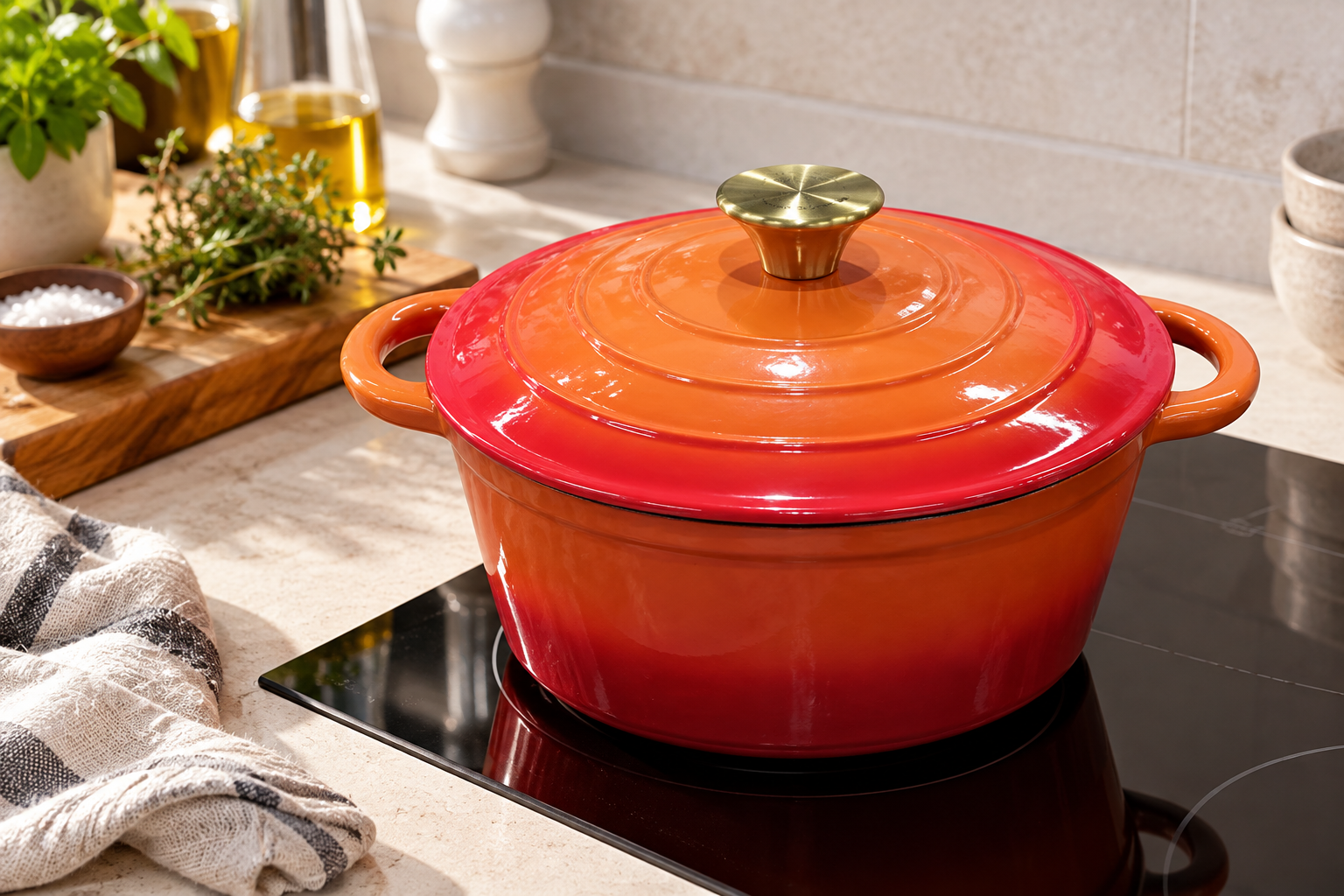
Cast iron is naturally magnetic, but oven use still depends on the lid, knob, enamel and the maker's stated limit for that exact casserole.
Match the base to the cooking zone
Induction zones have a working area and often a minimum pan-detection diameter. Centre the cookware and match the flat magnetic part of its base to an appropriately sized zone. A wide pan on a small zone may heat unevenly; a very small moka pot or saucepan on a large zone may not be detected. Ring markings on the glass are a guide, not a promise — the hob manual gives the useful base-diameter limits.
Do you need an induction adapter plate?
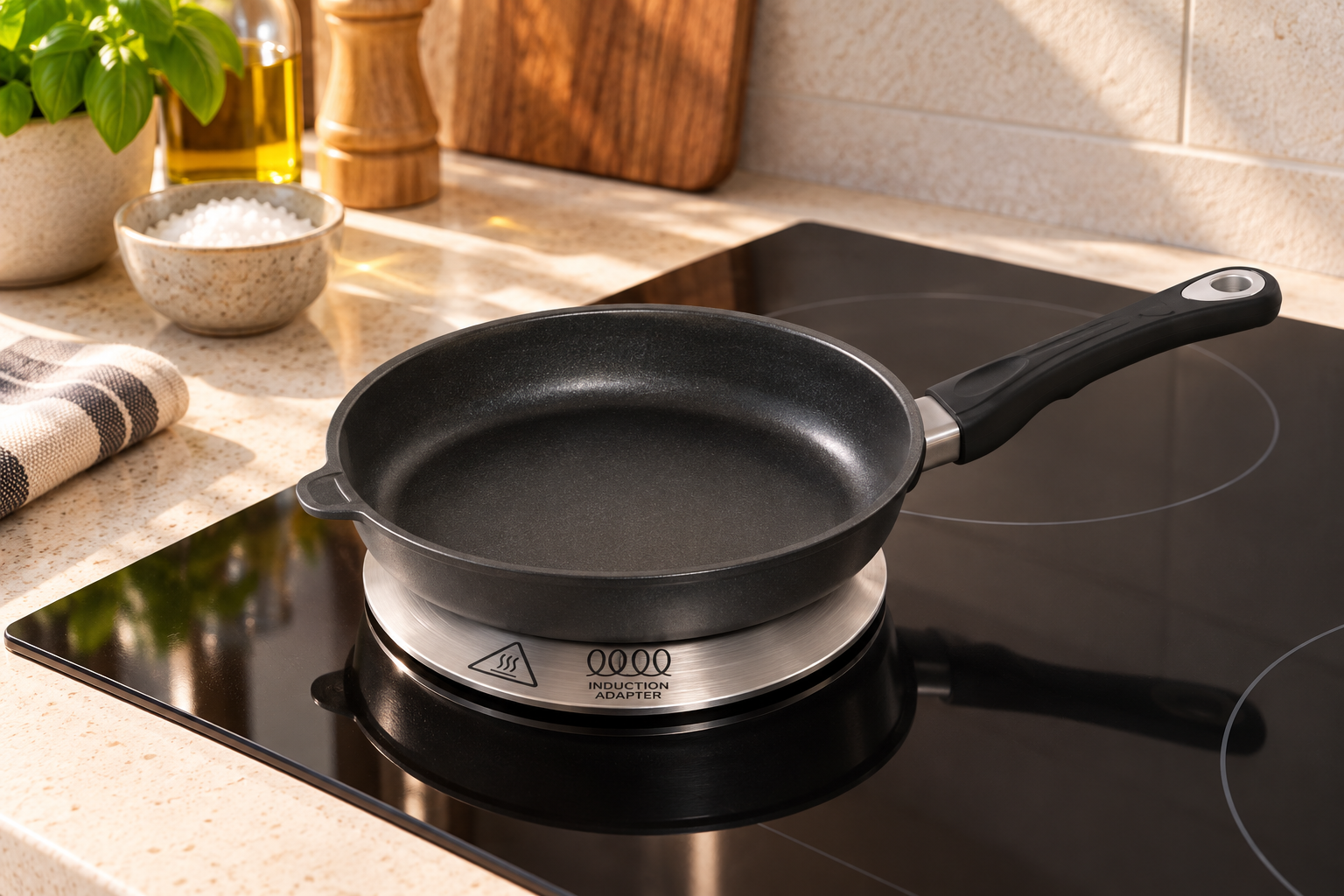
An adapter is a magnetic metal plate that the induction hob heats; the plate then transfers heat into non-magnetic cookware sitting on top. It can keep an existing aluminium moka pot or other suitable piece in use, but it gives up some of induction's speed and responsiveness. It also adds a separate object that remains hot after the cookware is removed.
Use an adapter only when its maker permits the cookware type, size and heat setting you need, and when your hob instructions allow adapter plates.
Match the adapter to the cooking zone and keep the cookware stable and centred on it.
Follow the adapter's cooling and handling instructions. Do not treat its handle or upper surface as cool immediately after use.
For frequent induction cooking, purpose-built induction cookware is usually more responsive. An adapter is most useful for an existing, occasional piece that you genuinely want to retain.
An adapter can bridge the compatibility gap, but both the adapter and hob instructions still govern how it may be used.
Oven safety follows the weakest component
The metal body may tolerate more heat than the rest of the cookware. The usable oven limit is the lowest limit among every fitted component. Check long and side handles, lid handles and knobs, glass lids, silicone sleeves, plastic or wooden parts, coatings, seals and removable fittings. A lid may have a lower limit than its pan, and grill or broiler use may be excluded even when ordinary oven use is allowed.
All-metal construction can be a good sign, but it is not a temperature rating. Read the maker's stated oven limit.
Glass lids need their own approval and limit; rapid temperature changes can be more important than the pan body's material.
Non-stick and decorative coatings differ. Never transfer one range's oven temperature to another because both are described as non-stick.
Removable silicone grips or handle covers should come off before oven use unless their own instructions explicitly say otherwise.
After oven use, assume every metal handle is hot. Keep a dry oven glove on it while the pan is out, so nobody mistakes it for a cool stovetop handle.
Read the markings and instructions
Turn the cookware over and look for an induction-coil symbol, the word induction, or a list of supported heat sources.
Find the oven statement for the exact model, including its temperature limit and whether that limit changes with the lid fitted.
Check the hob manual for minimum and maximum base diameters, zone bridging and any restriction on adapter plates.
Keep the care leaflet or save the maker's current product instructions. A shop category, material name or magnet test is not a substitute for model-specific guidance.
Troubleshooting common mistakes
The hob does not detect the pan: centre it, try a zone suited to its flat base diameter, remove anything between pan and glass, and confirm a firm magnetic response. If it still fails, do not keep cycling the hob at full power.
Heating is patchy: the base may be too large for the zone, not fully flat, or only partly magnetic. Move to a better-matched zone and follow the maker's heat guidance.
The pan works on induction but the lid or handle is uncertain in the oven: treat it as not oven-safe until the exact component limit is confirmed.
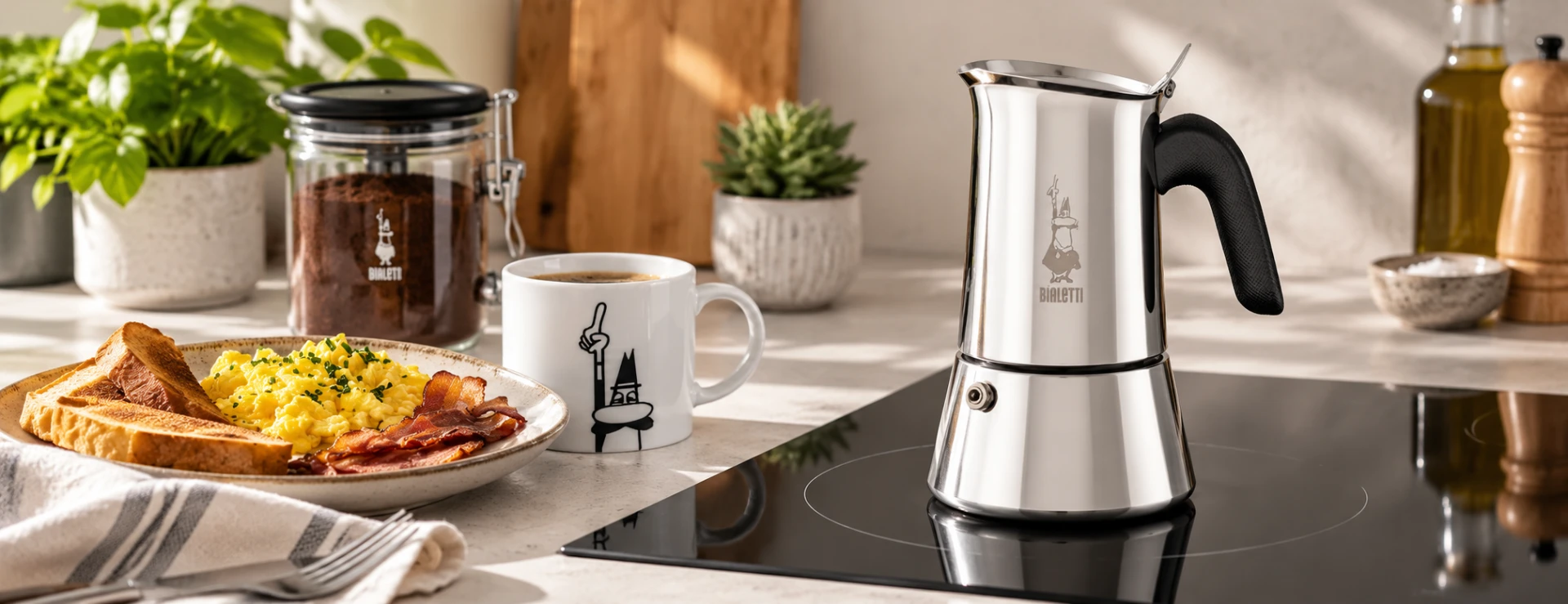
A plain aluminium moka pot is not detected: use a maker-approved adapter only if both the pot and hob instructions allow it, or use a moka pot explicitly made for induction.
The underside marks a glass hob: clean both surfaces before use, place heavy cookware down gently and lift rather than drag it.
Care belongs in the material guide
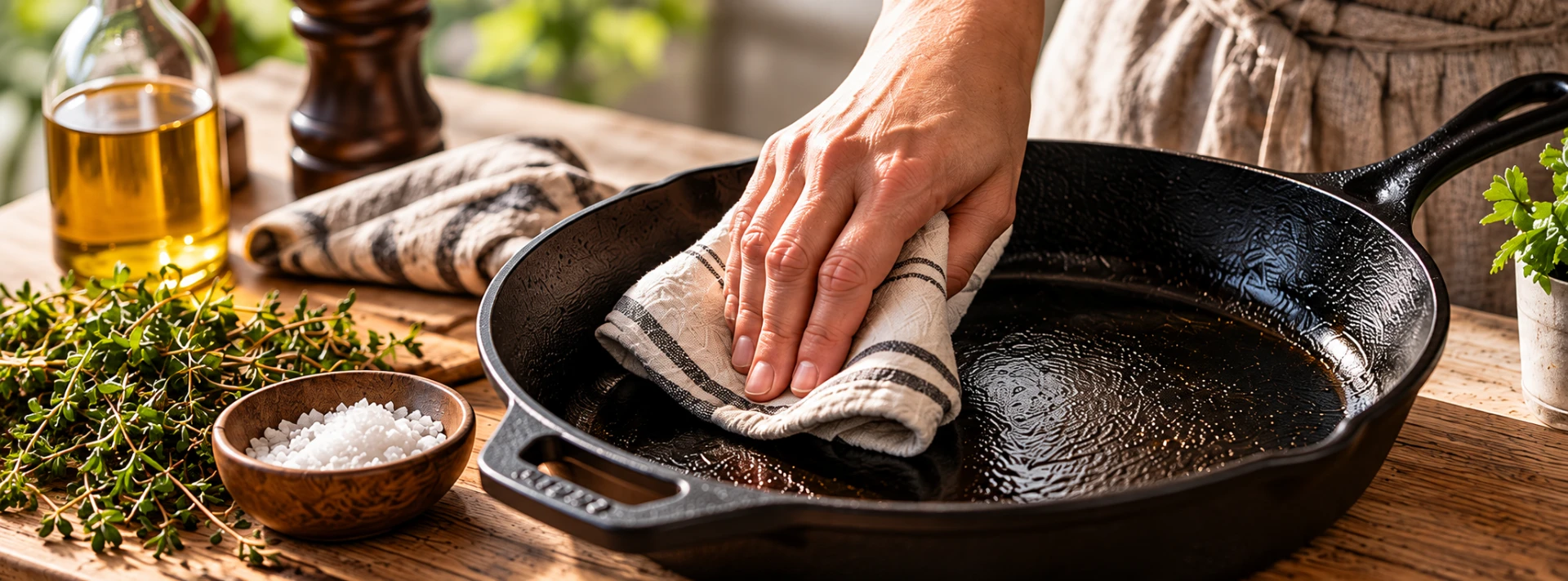
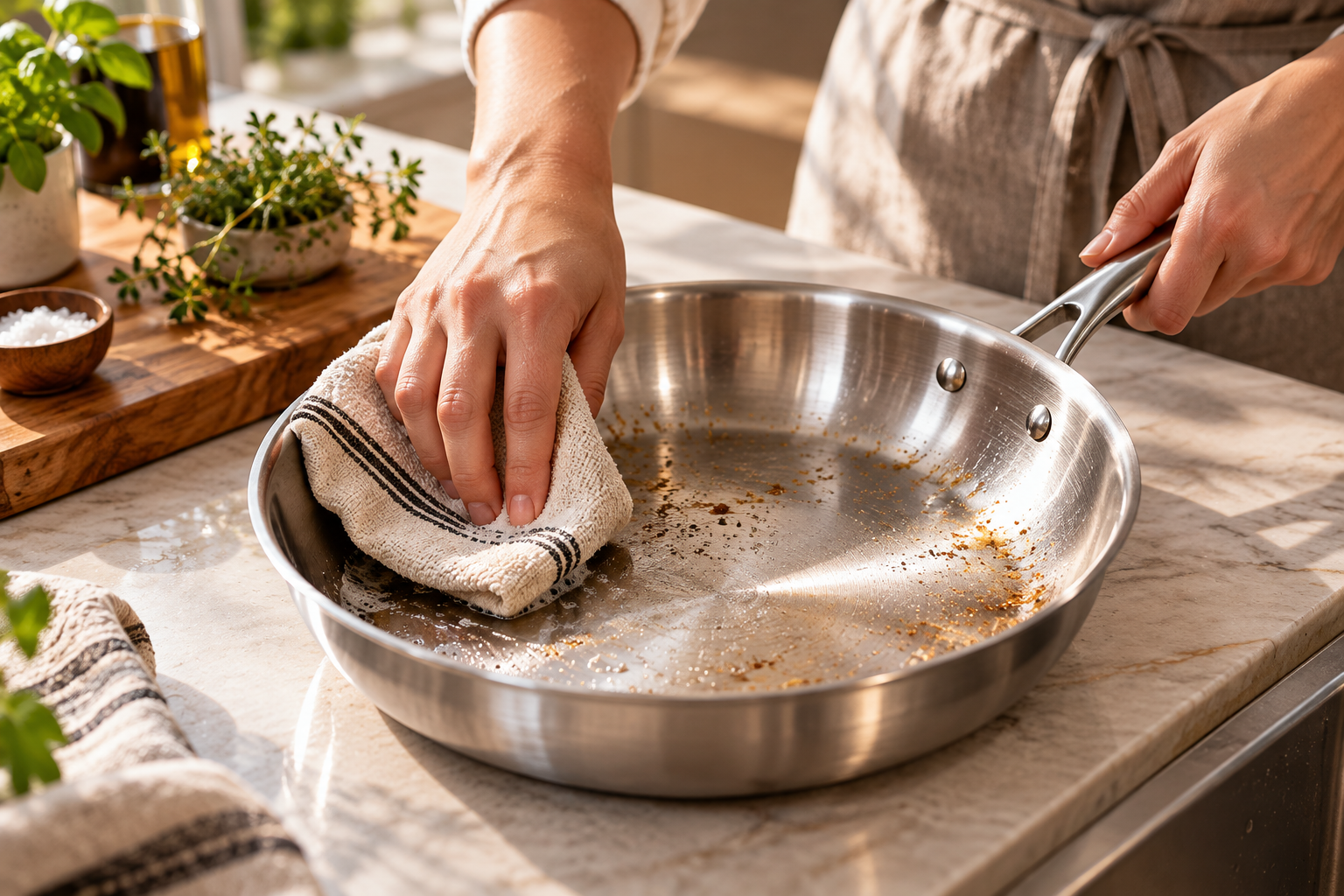
Compatibility tells you where cookware may be heated; it does not replace the care instructions for its surface. Our guides to non-stick, cast iron and stainless steel cover heat control, utensils, cleaning and storage. For choosing among those materials, use the cookware comparison. For moka-pot capacity, construction and hob fit, use the moka-pot buying guide, then follow the separate brewing and care guide.