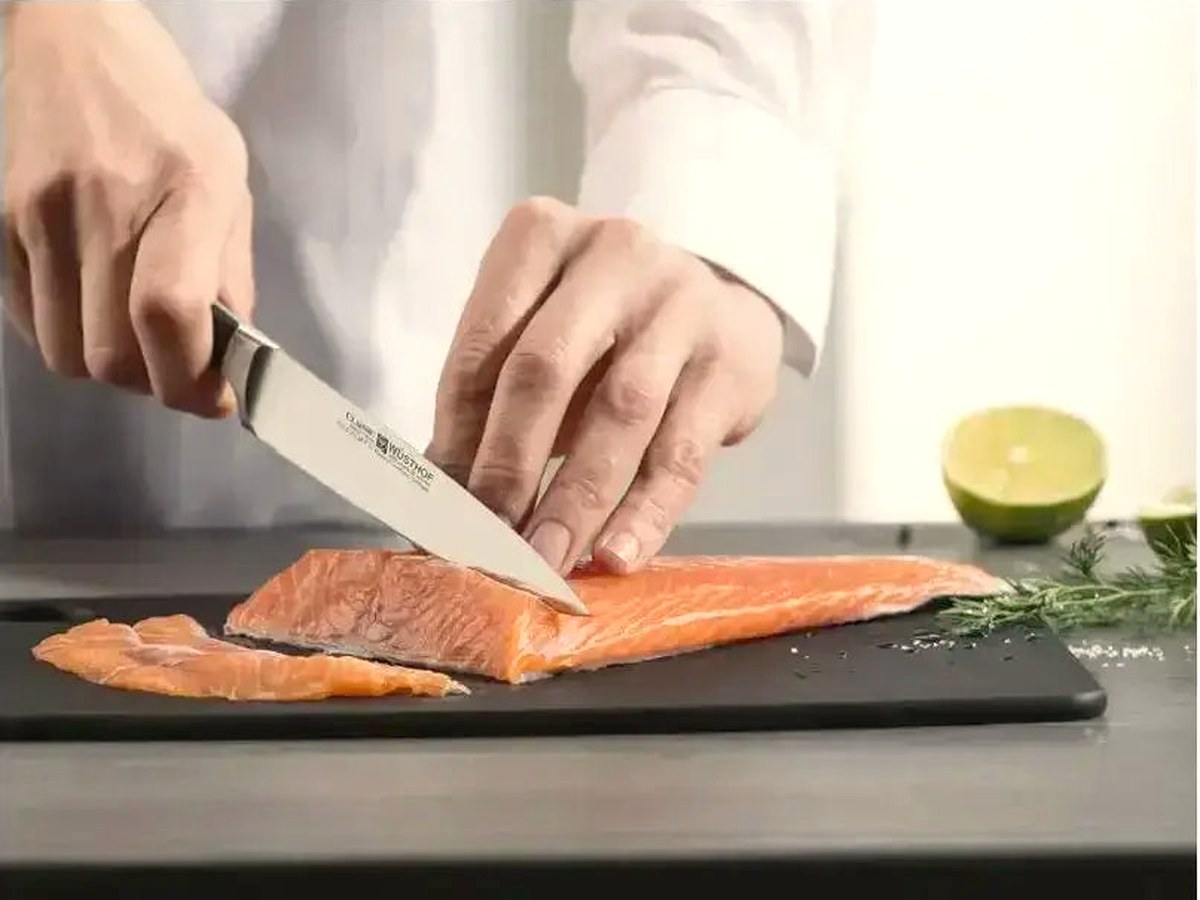
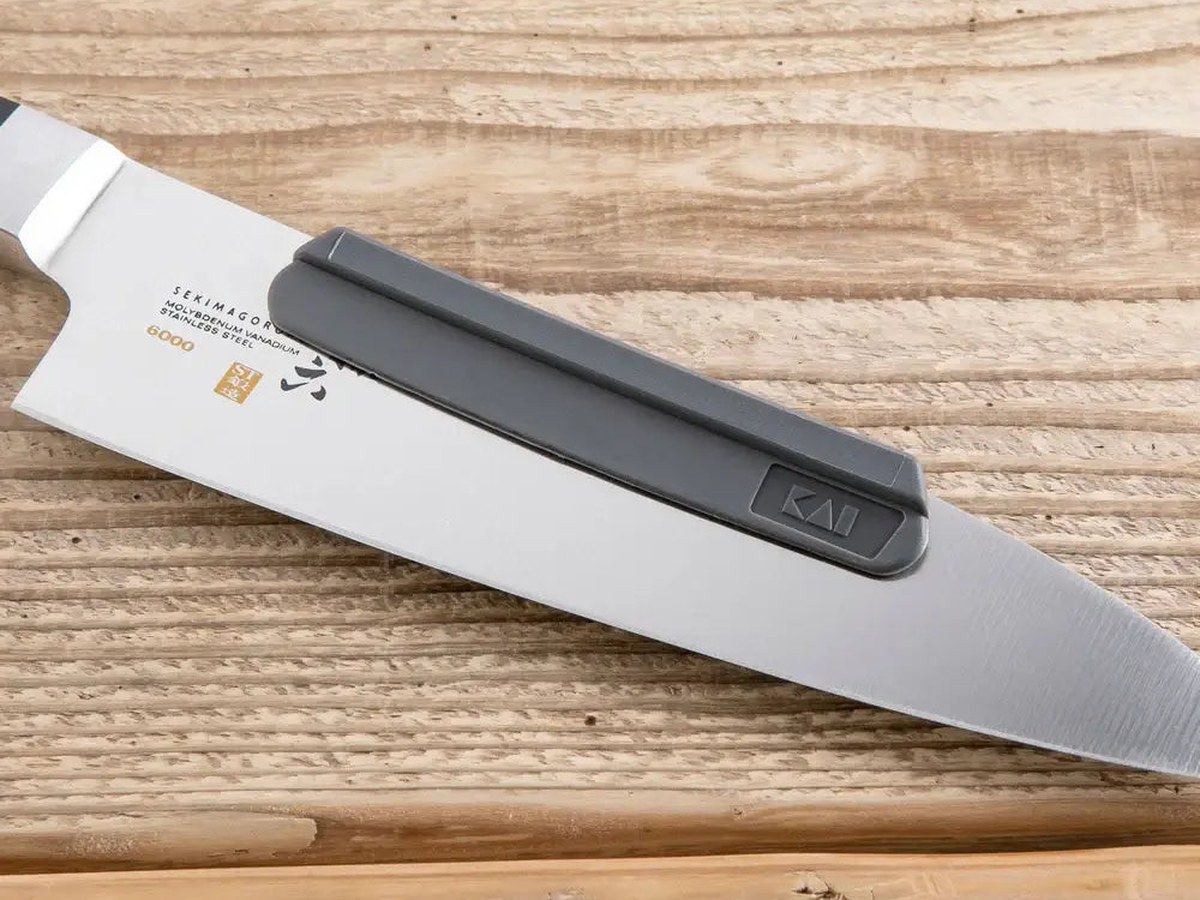
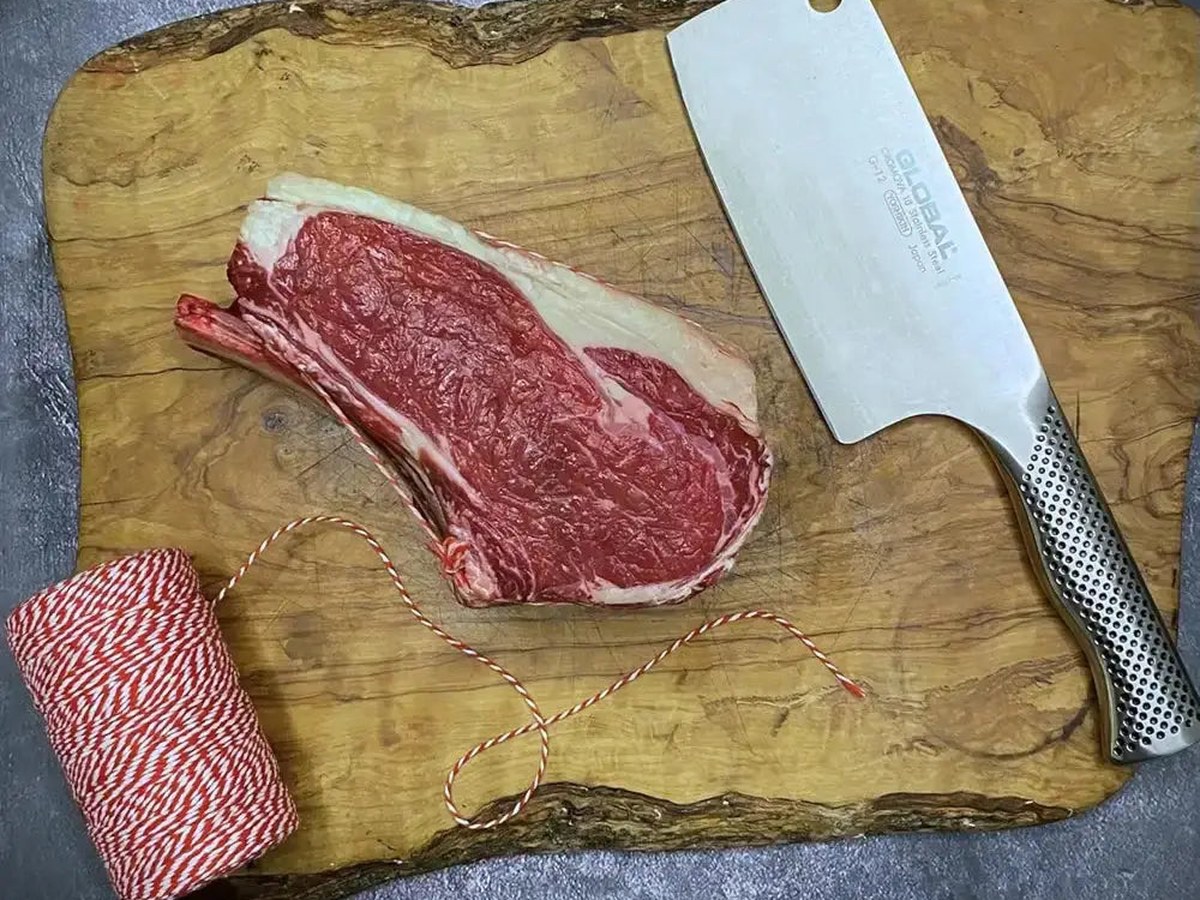
The knives a kitchen actually runs on. Chef's blades for daily prep, paring knives for close work, carving and bread knives for the table, plus the storage, sharpeners and accessories that keep every edge worth using.
Start with the blade you need. Every knife sits in exactly one of these thirteen categories — Japanese-style blades are listed within their type, not apart from it.
What a blade is made of, and how it is made, decides how it takes an edge and how it keeps one. These are the constructions across the Cookin range.
Stainless steel
The bulk of the range. Chromium in the alloy resists rust and staining, so a stainless blade forgives being left wet for a moment. Modern stainless knife steels take and hold a fine edge — the old trade-off is largely gone.
More carbon means a harder blade that can be ground to a finer edge. Most high-carbon knives here are high-carbon stainless: the sharpness benefit with the stain resistance kept. Dry them promptly all the same.
A hard cutting core clad in many folded layers of softer steel, which shows as the rippled pattern on the blade face. The core does the cutting; the cladding protects it. Mostly found on Japanese-made blades in the range.
A forged blade is shaped from a single heated billet and usually carries a bolster; a stamped blade is cut from rolled sheet and is lighter and less costly. Both can be excellent — forged tends to feel heavier and more substantial in the hand.
Where you will find it
Sets are a good place to compare the two side by side
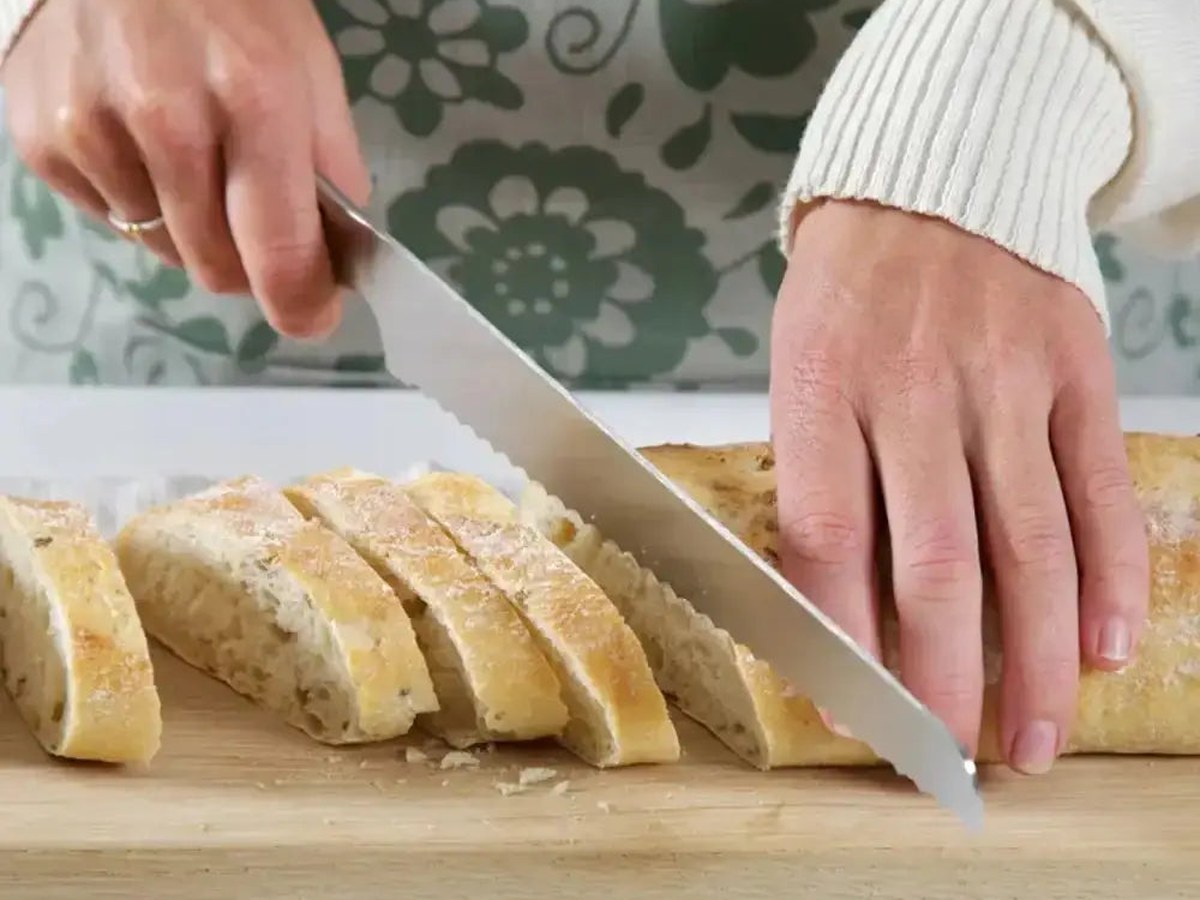
A plain edge is sharpened and honed at home and slices cleanly. Serrations saw through crust and tough skins, stay usable for longer, but need specialist sharpening. Most kitchens want a plain-edge chef's knife and one serrated bread knife.
Synthetic handles (POM, Fibrox, Micarta) are dishwasher-tolerant and grippy when wet. Wood — olive, pakka, beech — is warmer to hold and better looking, but wants hand-washing and an occasional oiling.
Where you will find it
Olive-wood table knives and pakka-wood Japanese handles
Roughly a third of the range is Japanese-made or Japanese-profiled: santoku, gyutoh and nakiri shapes, harder steel and a flatter edge that cuts straight down rather than rocking. We list them inside their knife type rather than as a separate category, so look within chef's knives and vegetable knives.
Choose the right blade, understand the steel, use it well, keep the edge and store it properly. Short, honest answers from the shop floor — the product page carries the maker's full specification and care for every knife.
Which knife should I buy first?
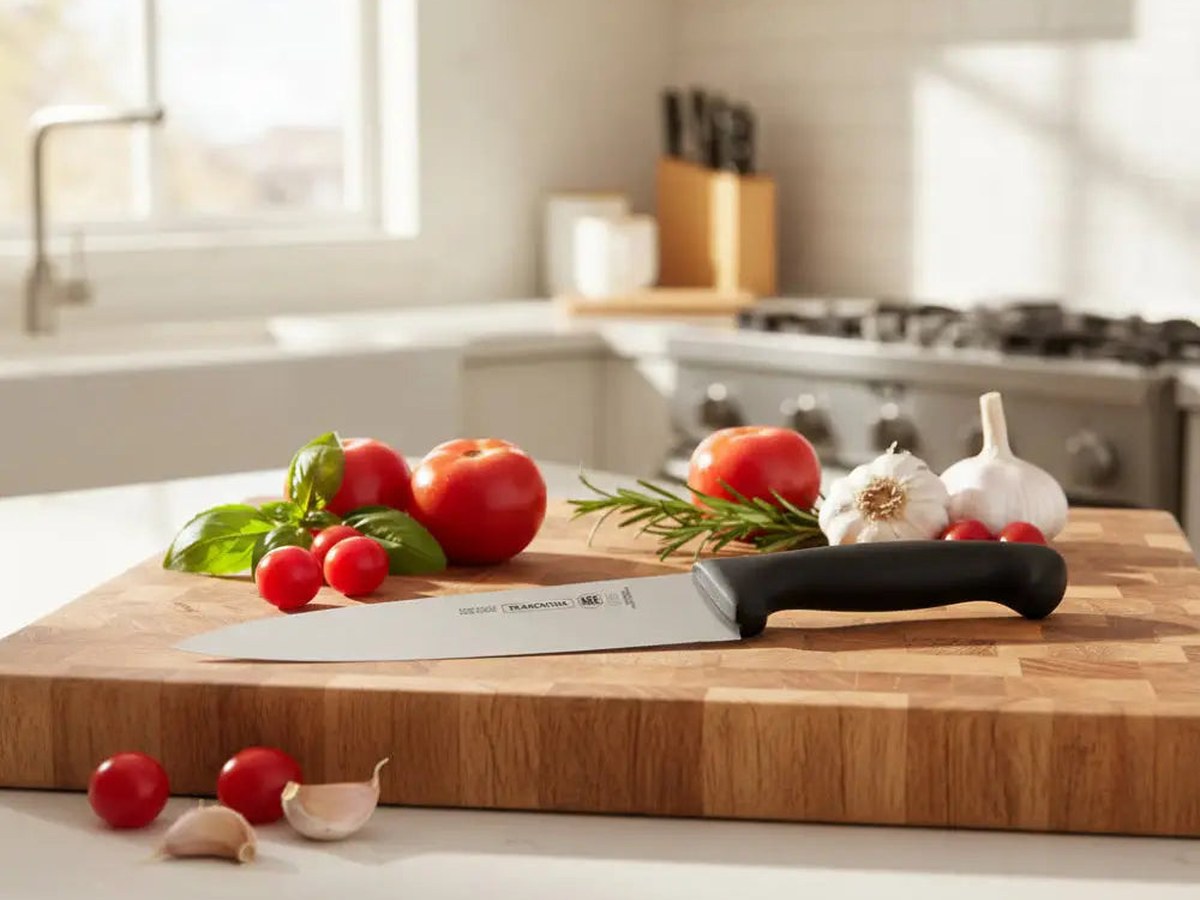
A 20cm chef's knife, a paring knife and a serrated bread knife cover most home cooking. Add carving, boning or vegetable knives only where you cook that way often — a knife you use weekly is worth more than three you don't.
Japanese or Western profile?
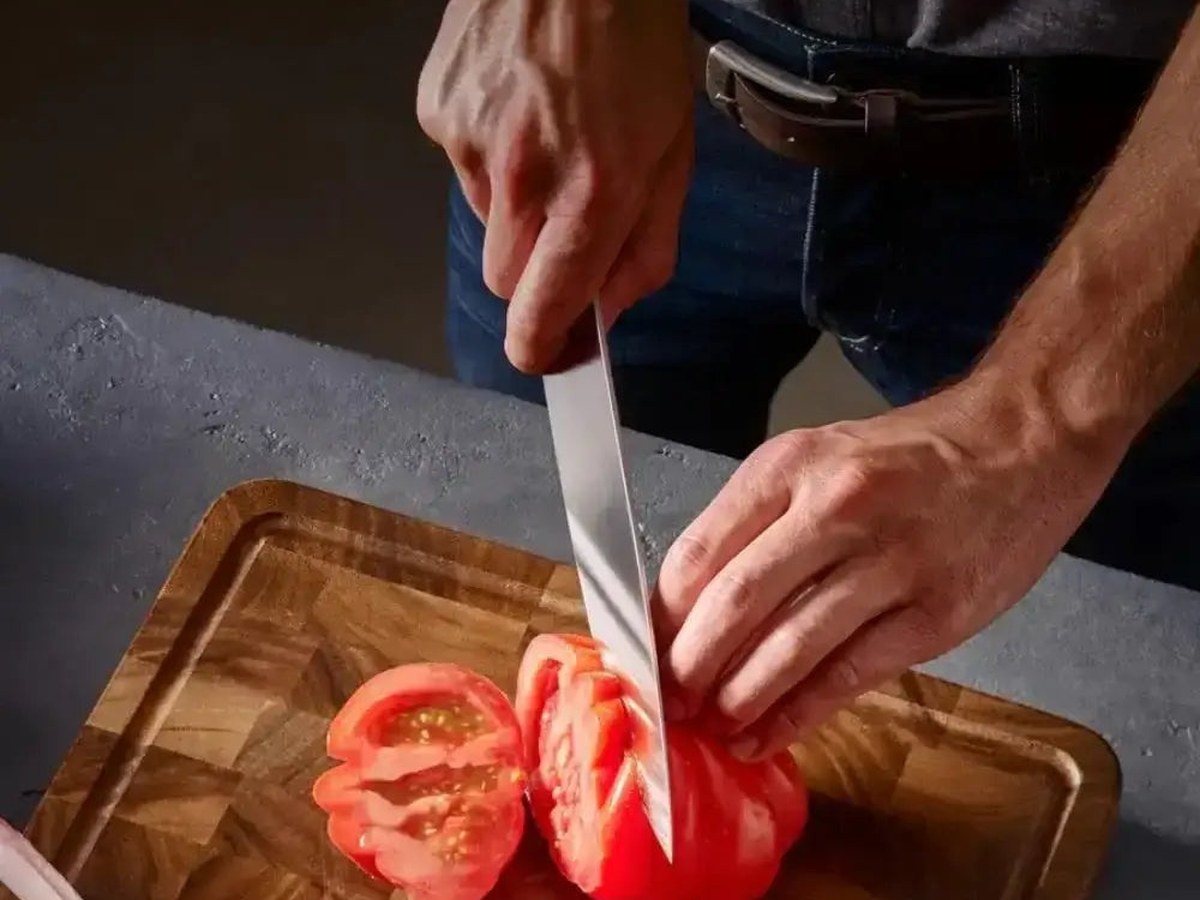
A curved German-style edge rocks through herbs and onions; a flatter Japanese-style profile pushes straight down through produce and is usually thinner and lighter. Neither is better — it is a preference, and many cooks keep one of each.
Honing or sharpening?
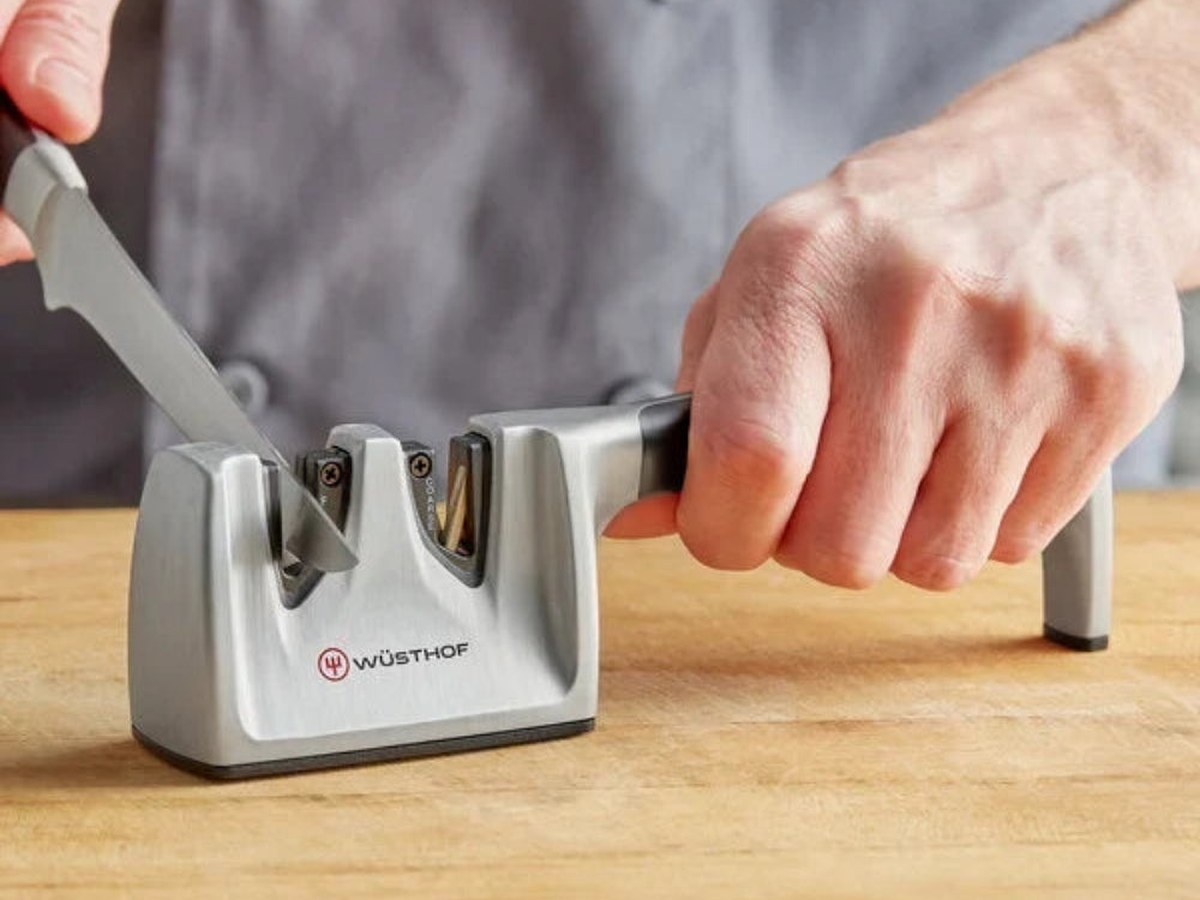
Honing on a steel realigns an edge that has rolled over with use — do it little and often. Sharpening on a stone or pull-through removes metal to make a new edge — a few times a year is enough. A knife that will not hone back needs sharpening.
How do I keep the edge?
Cut on wood or plastic, never glass, stone or a plate. Wash by hand, dry straight away and put the knife back where it belongs. Most edges are lost knocking about in a drawer, not on the board.
How should I store knives?
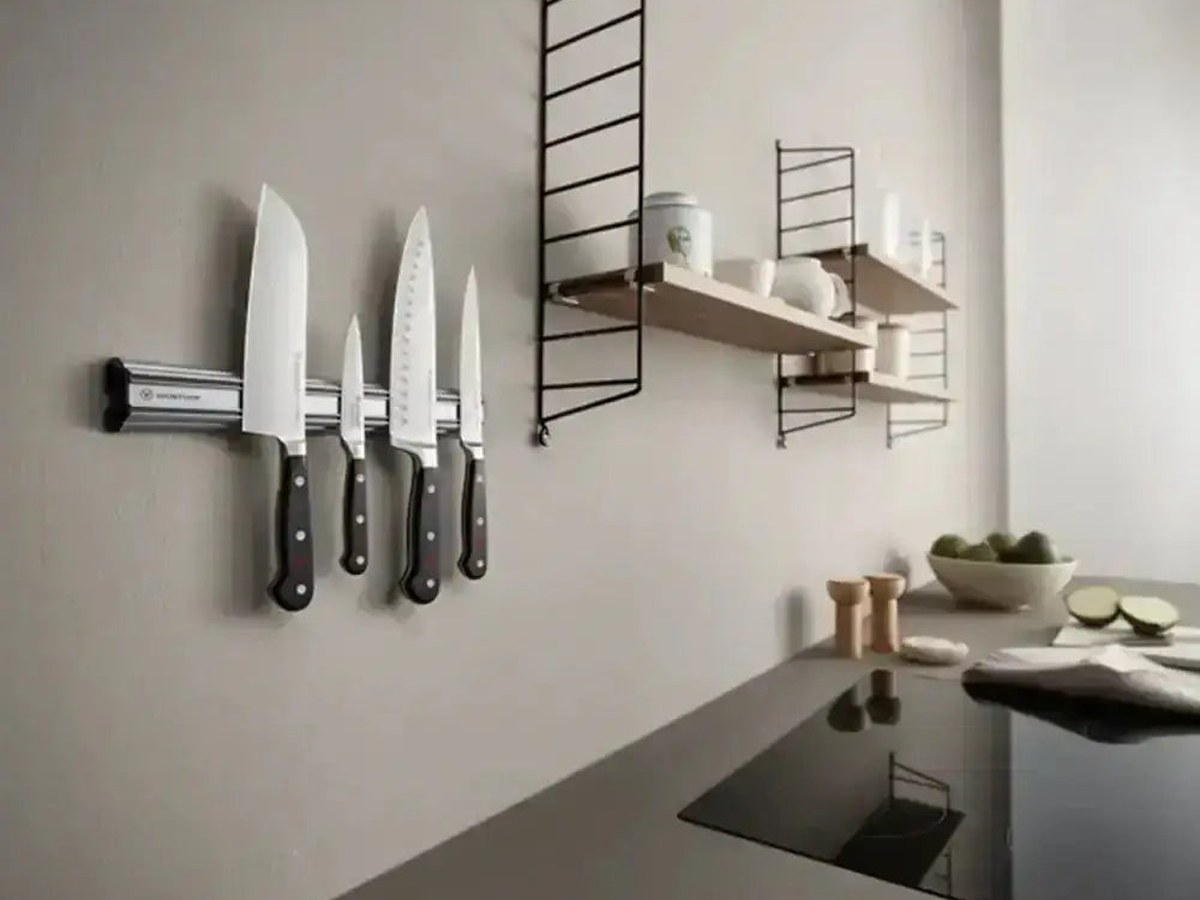
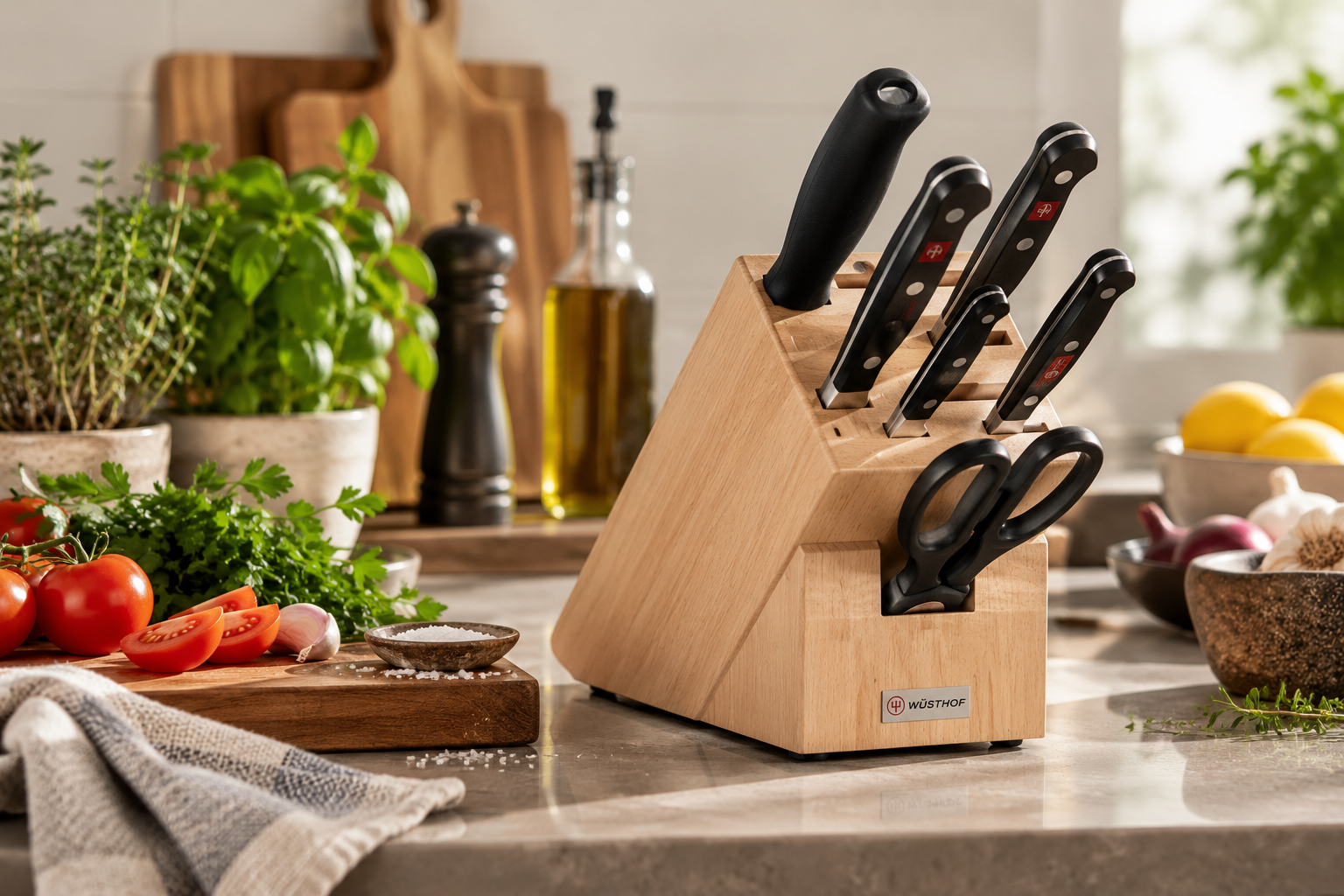
A block, a magnetic strip, an in-drawer tray or a blade guard all stop edges touching. Magnetic strips keep blades visible and dry; blocks with bristle inserts take any shape; guards and rolls travel with the knife.
Can it go in the dishwasher?
Almost never, even when the label allows it. Detergent dulls the edge, heat stresses handles and blades knock against the rack. Every Cookin product page lists the maker's care instructions — hand-wash is the safe default.
Cookin favourites
Eight we would put in our own kitchens
Across brands, categories and prices — from a first knife to the one you buy once. Not a bestseller list; a considered shortlist.
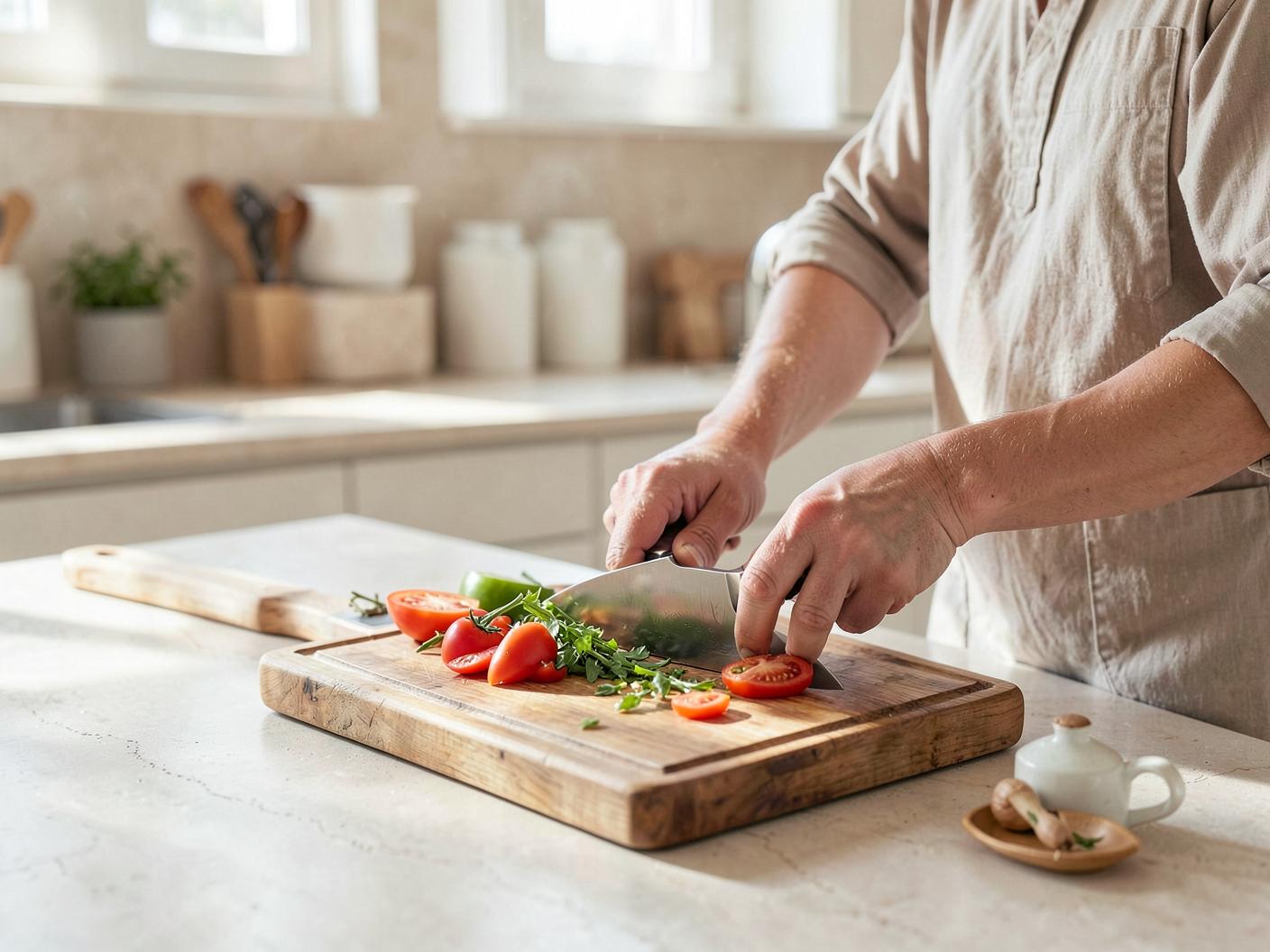
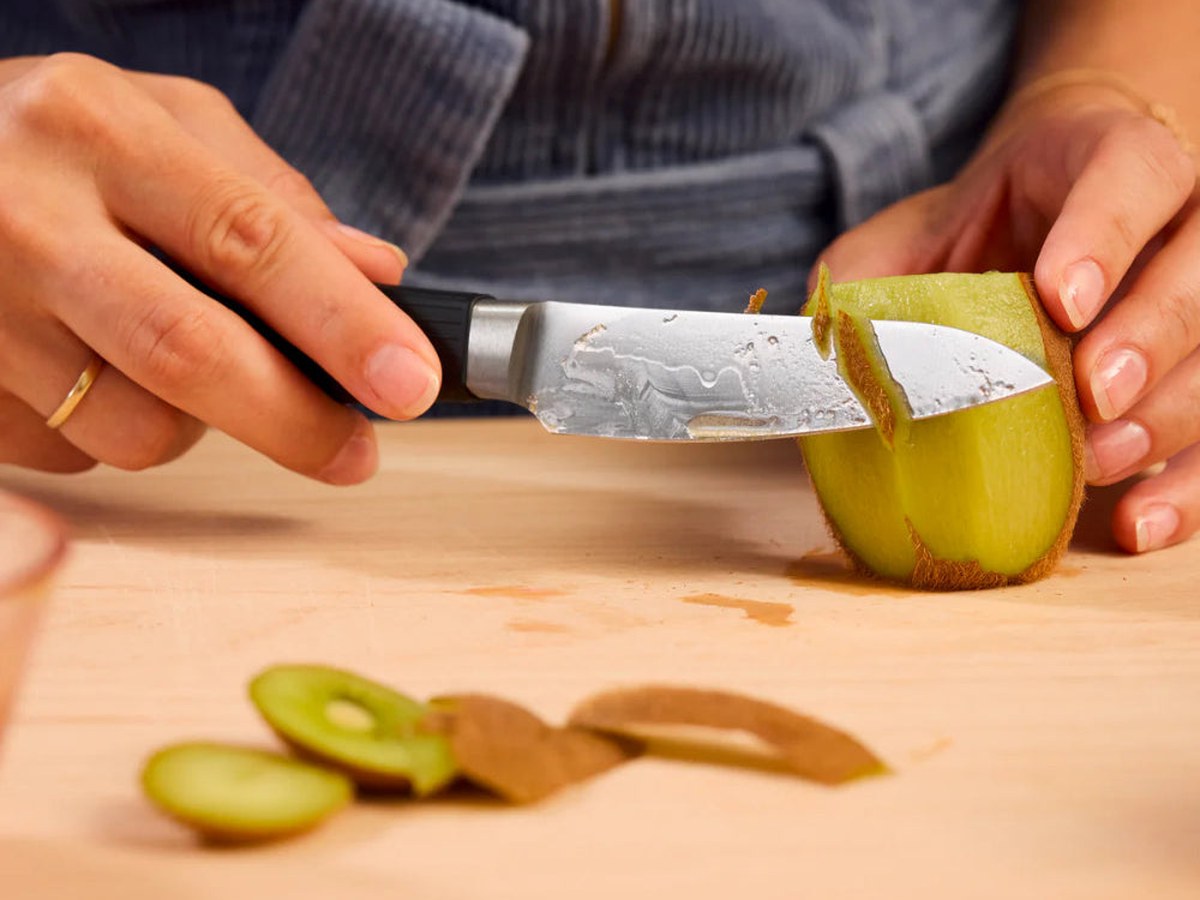
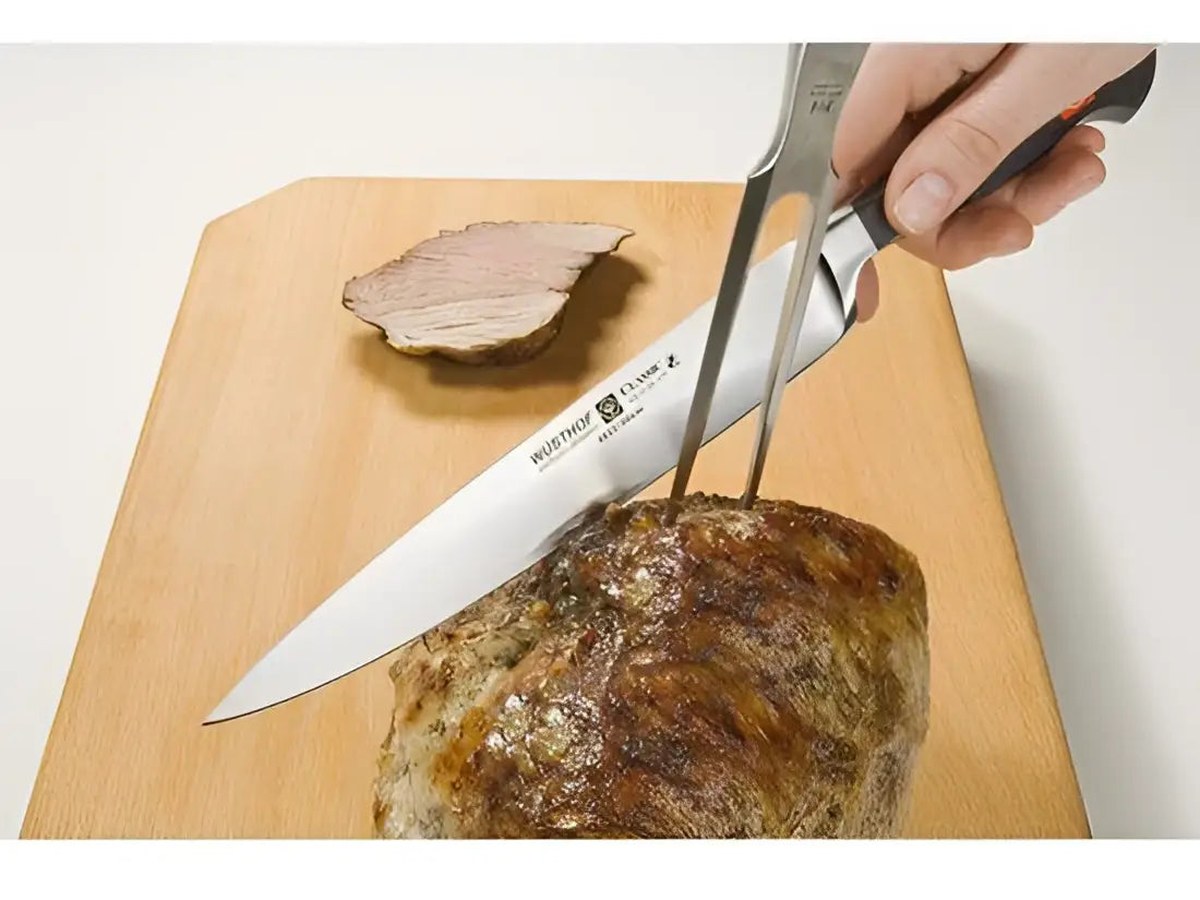
A knife is judged in the hand: how it balances, how it holds an edge and how comfortably it works through a full evening of prep. Chef's and cook's knives cover most jobs, paring knives handle close work, serrated blades cut crust without crushing crumb, and carving knives take clean slices off a roast.
Cookin stocks knives from brands we know and trust, including Wusthof, Zwilling, Victorinox, Global, Kai Shun, Miyabi and Tramontina. Shop by type to find the right blade, or browse the full collection with brand, price and availability filters. Japanese and Asian-style blades are listed within their knife type rather than as a separate category.