
How To
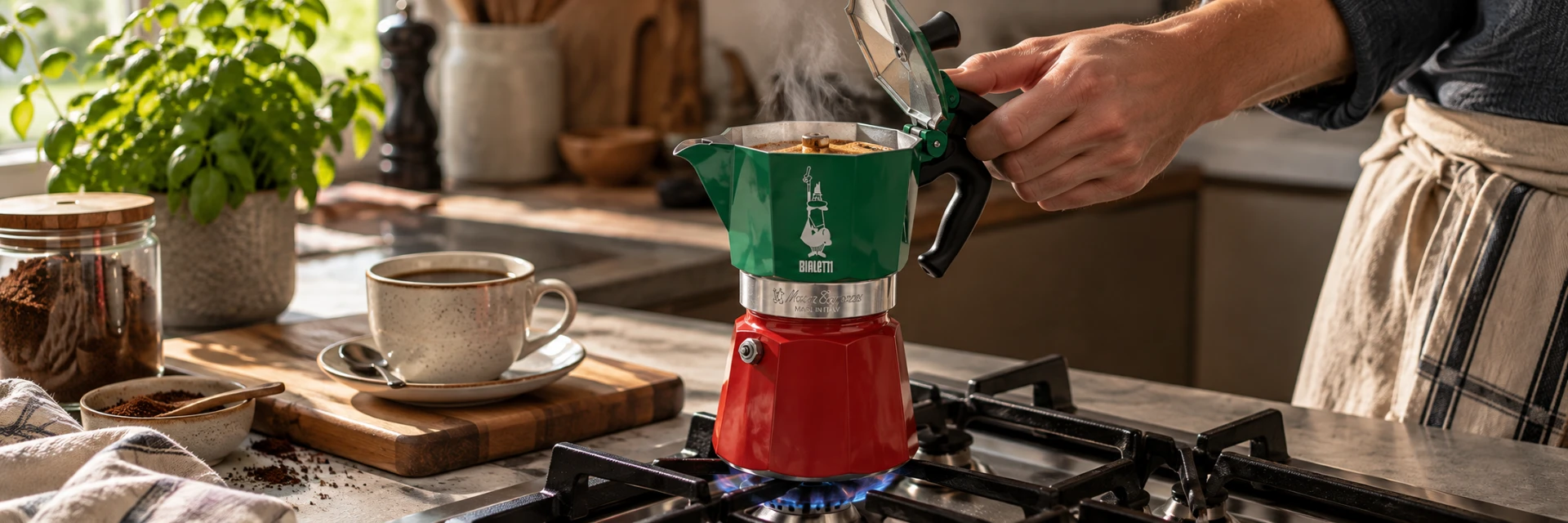
How to use and care for a moka pot
First use, hot water, a level basket, gentle heat and an early stop — plus cleaning, drying, gaskets, storage and troubleshooting for a stovetop moka pot.
The cup number is smaller than it sounds, and not every pot works on every stove. Start with how much coffee you make, then match the material and base to your hob.
By Cookin · 24 September 2026 · 5 min read
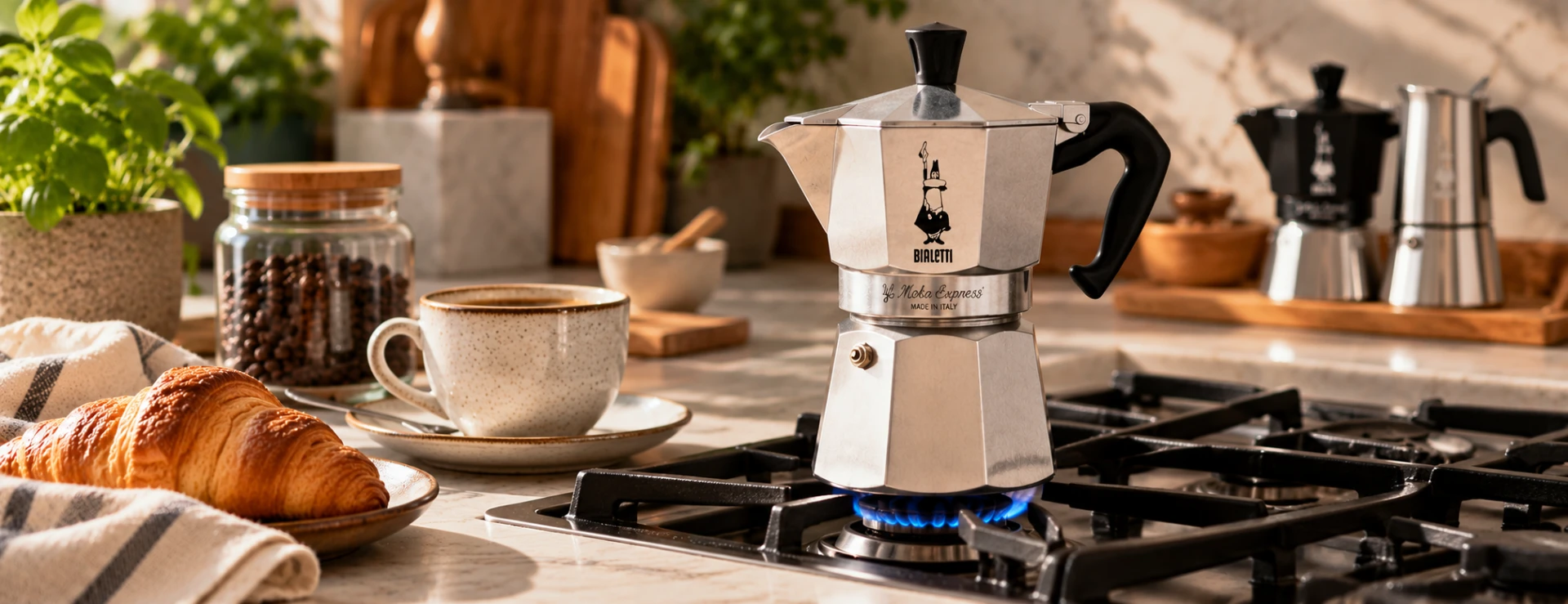
A moka pot is a simple purchase once three decisions are separated: how much concentrated coffee you want to make at once, what the pot is made from, and whether its base works on your hob. The familiar cup number is not a mug count, and the classic aluminium shape is not automatically induction-ready. Get those points right and you can choose without treating price, colour or brand as a shortcut for suitability.
This is a buying guide rather than a brewing guide. Once you have chosen a pot, our guide to using and caring for a moka pot covers grind, filling, heat, cleaning, gaskets and storage in detail.
A moka-pot cup means a small Italian-style serving of concentrated coffee, not a 250 ml breakfast mug. The exact output varies by maker and model, so compare the stated capacity in millilitres as well as the cup number. In the current Cookin range, for example, a three-cup aluminium pot is about 130 ml, while different six-cup models are listed at roughly 270 to 300 ml. The cup label alone does not guarantee one fixed volume across every range.
Traditional moka pots are commonly aluminium. They are light, heat quickly and come in the familiar faceted form. Aluminium itself is not magnetic, so a standard aluminium base will not work directly on an induction hob. Cleaning instructions can also be specific: many makers call for hand-rinsing without a dishwasher or abrasive detergent. Follow the instructions supplied with the exact pot rather than applying one care rule to every material.
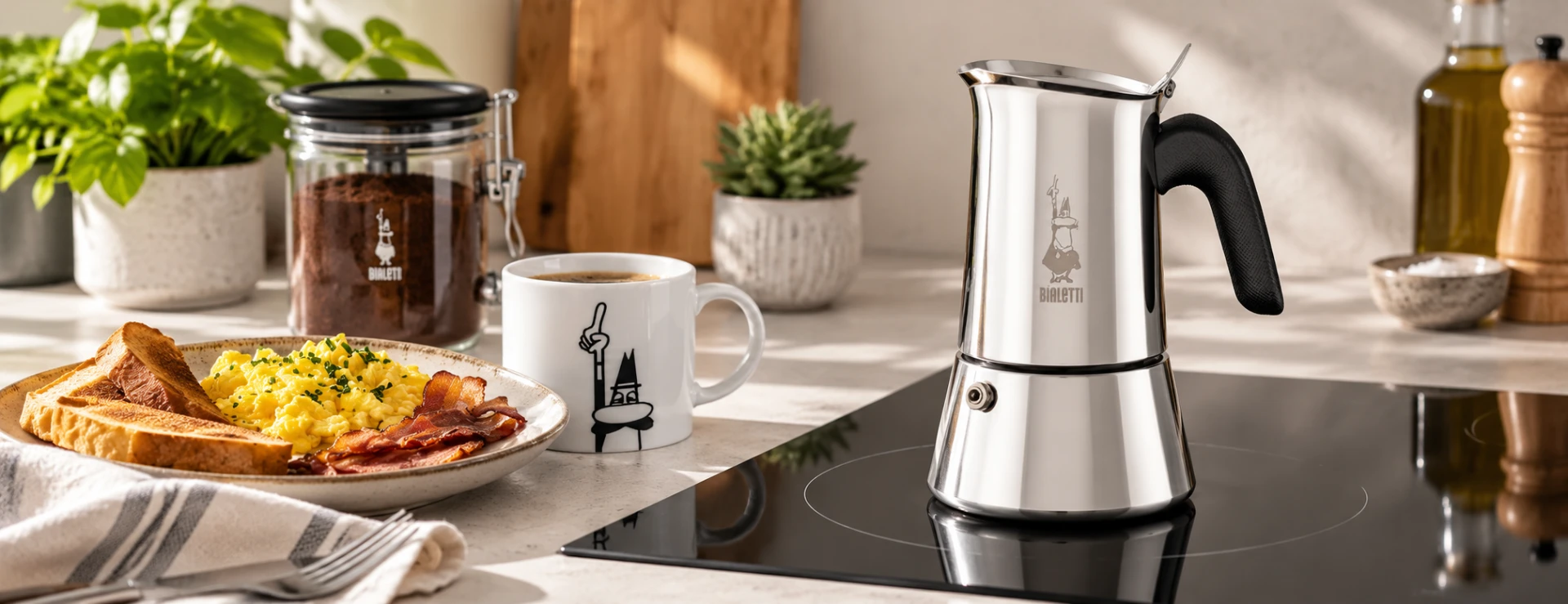
Stainless steel pots are typically heavier and are often chosen for their durability and easier fit with modern kitchens. Some stainless steel models are induction-compatible, but stainless steel as a description is not enough on its own: the base still needs to be magnetic and suitable for your hob. Hybrid induction models may pair an aluminium upper chamber with a stainless steel lower chamber. That construction gives the pot an induction-ready base without making the whole pot stainless steel.
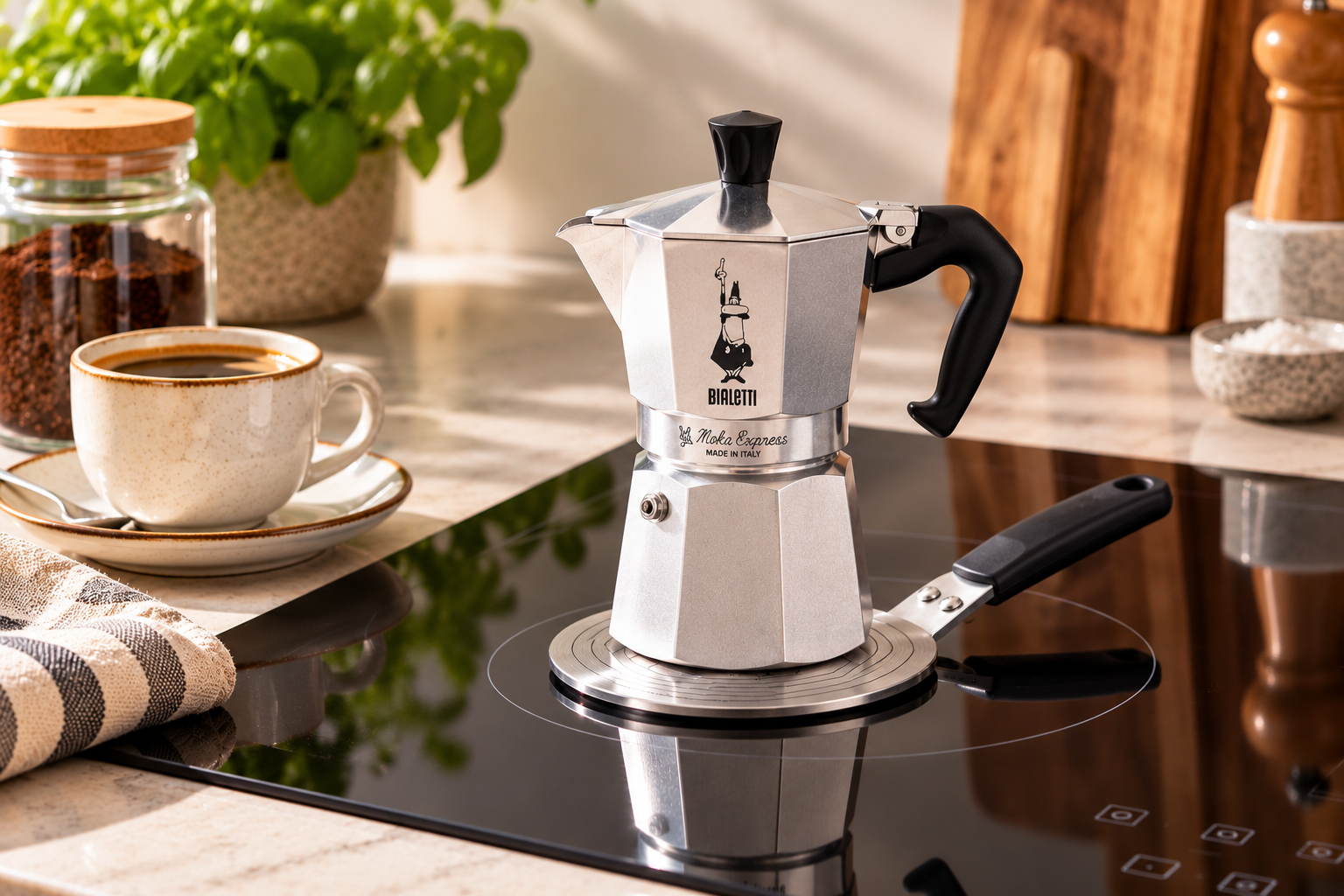
An induction adapter is a magnetic plate that heats on the hob and transfers that heat to a non-magnetic pot placed on top. It can let a suitable aluminium moka pot work on induction, but it adds another hot object, slows response and may be less efficient than buying an induction-ready pot. Check that the adapter is approved for induction, that it supports the pot's size, and that your hob maker permits one. Follow the adapter's heat limits and handling instructions; the plate remains very hot after the coffee is ready.
Where to look next
How To
First use, hot water, a level basket, gentle heat and an early stop — plus cleaning, drying, gaskets, storage and troubleshooting for a stovetop moka pot.

Buying Guides
A short, honest equipment list for a first flat, a self-catering rental or an Airbnb kitchen — what to buy well, what to buy cheaply, and what to skip entirely.
Kitchen Knowledge
How grind size, coffee-to-water ratio, water and brew time shape the cup — with starting points for moka pot, pour-over and French press, and a simple way to fix bitter, sour, weak or muddy coffee.