How To
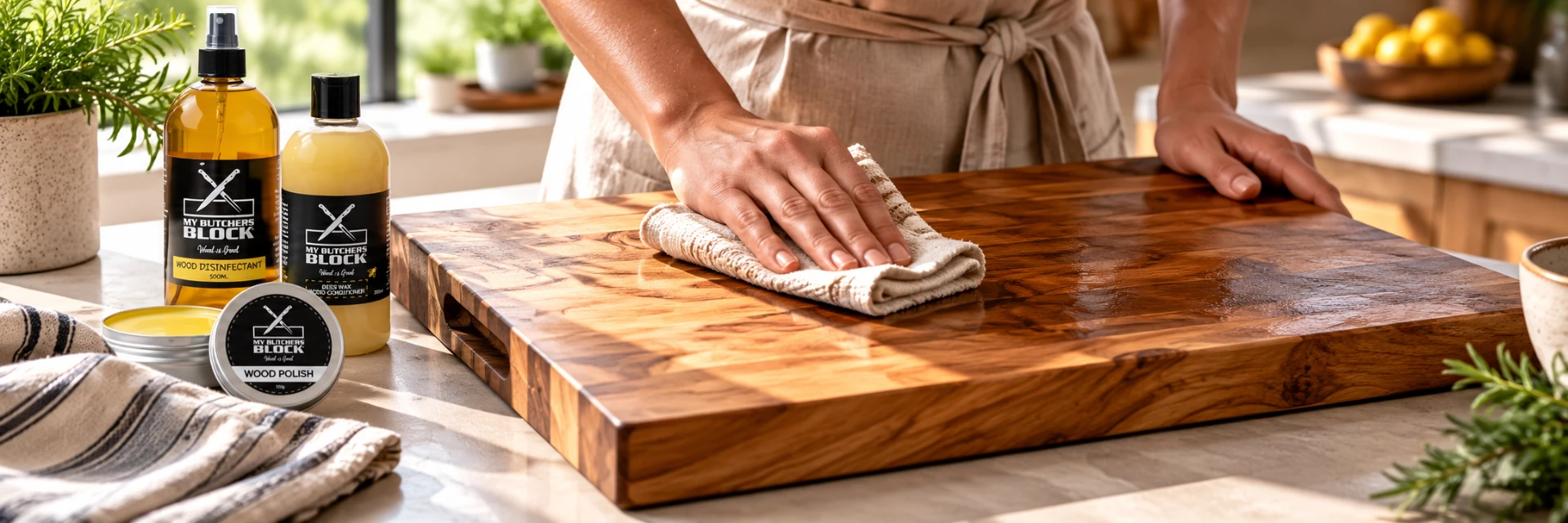
How to care for a wooden cutting board
First-use preparation, everyday washing and drying, oiling, odour and stain removal, and the signs that a board has reached the end of its working life.
Coatings rarely fail on their own. Heat, utensils and washing decide whether a non-stick pan lasts one year or many.
By Cookin · 22 September 2026 · Updated 24 September 2026 · 4 min read
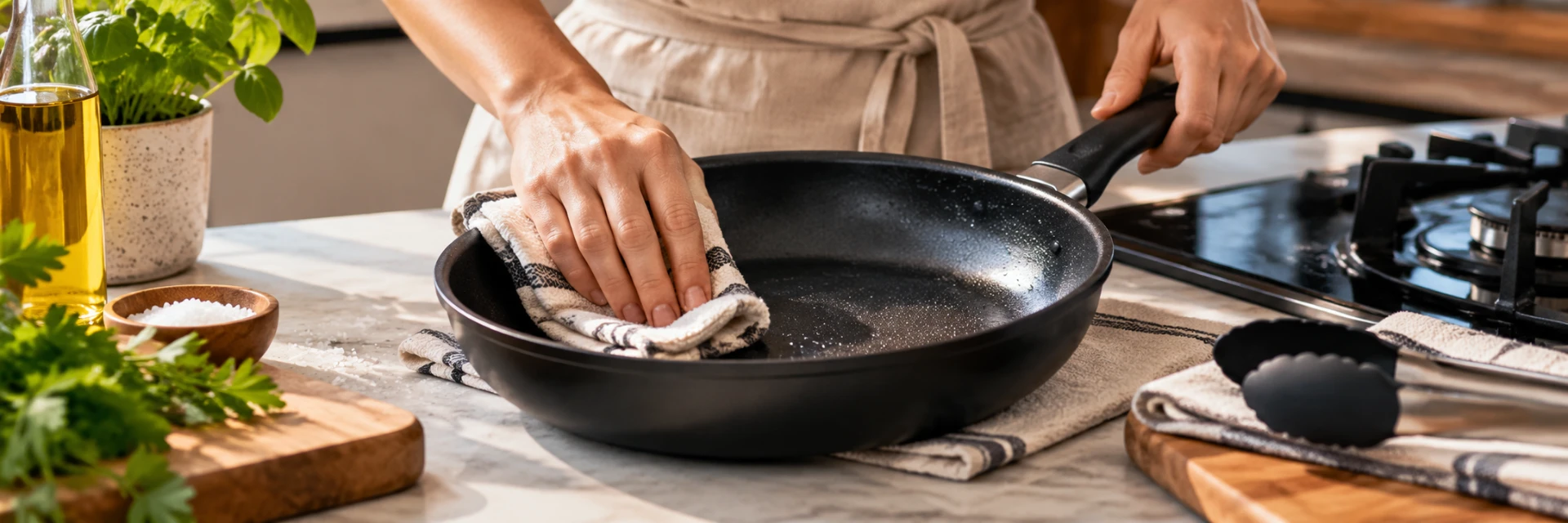
A non-stick coating is the one part of your cookware that is genuinely consumable. How quickly it is consumed is largely a matter of habit: how hot the pan runs, what touches the surface, and how it is washed and stored. What follows is general guidance that applies to most non-stick cookware. Coatings and constructions differ, so where your pan's own care instructions say something different, follow the manufacturer.
Most non-stick coatings are designed for low to medium heat, and heat is what wears them out fastest. An empty pan on a high plate climbs in temperature very quickly — well past the point most coatings are comfortable with. Keep the flame or plate at medium or below, match the pan to a burner of similar size so the edges are not scorched, and never leave an empty pan heating.
For hard searing — a thick steak, a deep crust — reach for stainless steel or cast iron instead. Non-stick is at its best for eggs, fish, pancakes, delicate vegetables and anything that would otherwise tear.
Wood, silicone and nylon. Metal turners, forks and whisks score the surface, and once a coating is cut, food catches in the scratch and the damage spreads outward. Never cut food in the pan, and avoid electric beaters or metal mashers inside it. Keep one set of soft utensils beside the hob and the choice stops requiring thought.
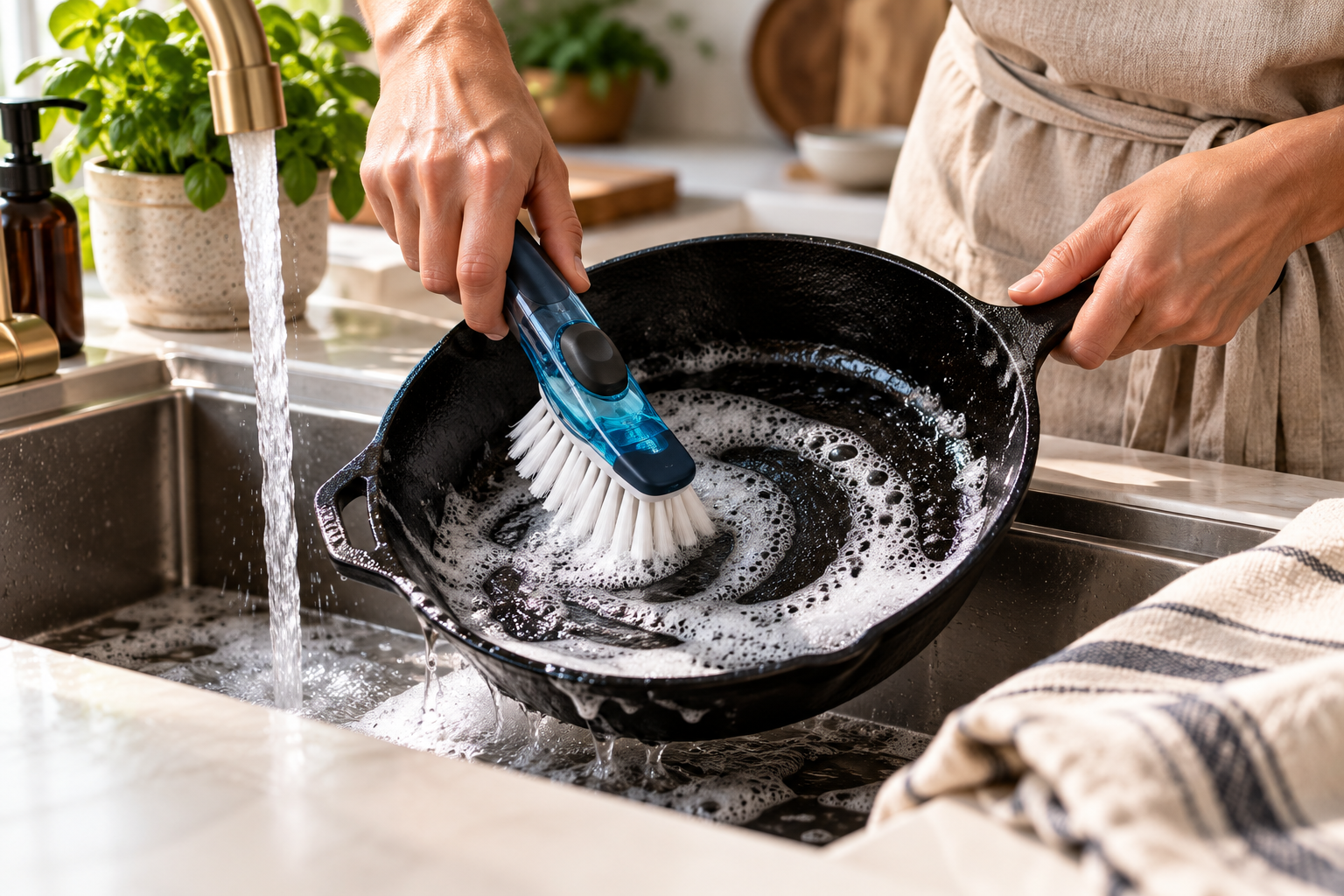
A short soak in warm soapy water — fifteen to thirty minutes — is fine for loosening residue. Avoid leaving a pan submerged overnight, particularly where handles are riveted or the exterior is uncoated aluminium. Some pans are labelled dishwasher-safe, and where the manufacturer says so it will not ruin the pan immediately, but dishwasher detergents are harsh and hand washing will keep the coating looking and performing better for longer.
Stacking pans inside one another grinds the base of one into the coating of the next. Hang them, store them side by side, or put a cloth, paper towel or felt pan protector between each pan. Lids stored upside down inside a pan do the same damage — keep them separate.
Replace a non-stick pan when the coating is visibly peeling, flaking or blistering, when deep scratches expose the metal beneath, when food sticks persistently even after a thorough clean, or when the base has warped badly. Consult the manufacturer's guidance on damaged coatings for your specific pan. A failing pan makes cooking harder in ways people tend to blame on themselves — at that point a replacement is the better investment.
Moderate heat, soft utensils, a gentle wash and careful storage — done consistently, that is all a good non-stick pan asks for to become a long-term part of the kitchen.
Where to look next
How To
First-use preparation, everyday washing and drying, oiling, odour and stain removal, and the signs that a board has reached the end of its working life.

Buying Guides
What each cookware material is genuinely good at, where it fails, and the three-pan combination that covers almost every kind of home cooking.
Buying Guides
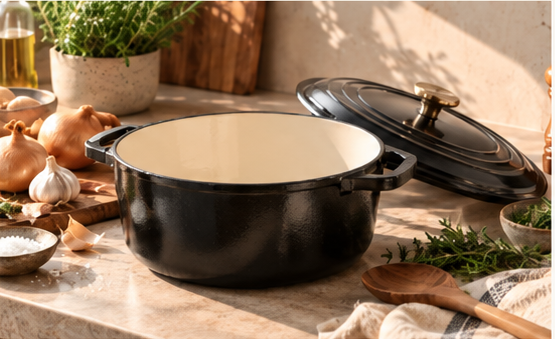
Size, shape and enamel — how to choose a cast iron casserole you will still be cooking in thirty years from now.