How To
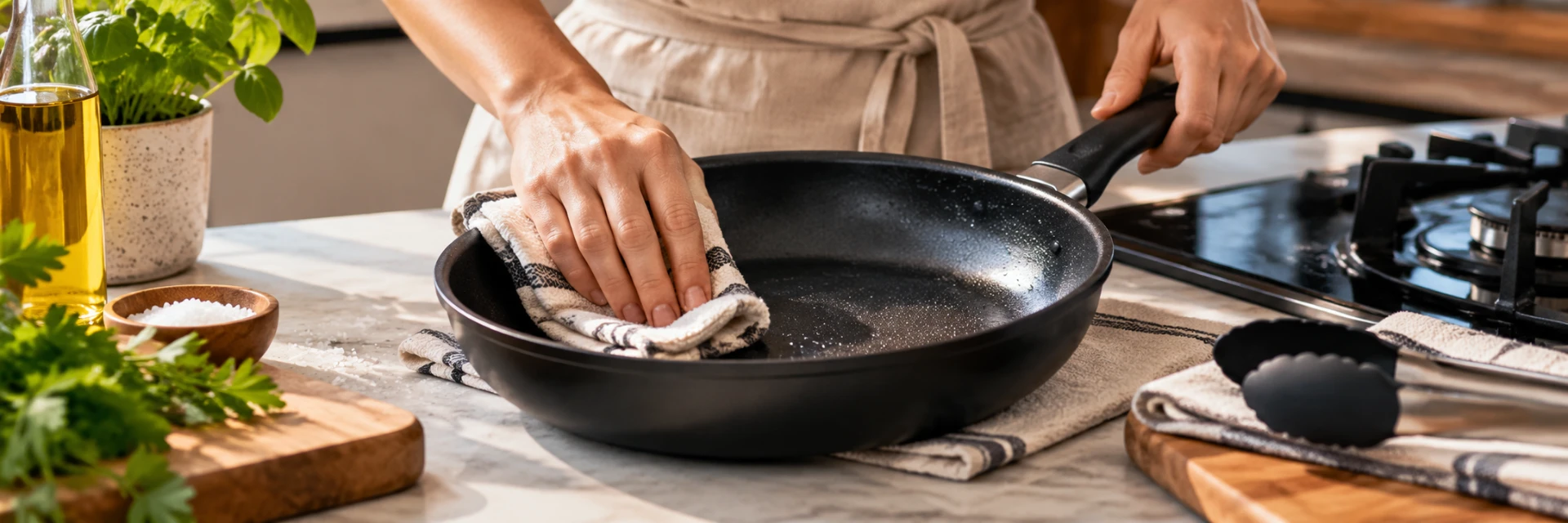
How to care for non-stick cookware
First use, heat control, utensils, cleaning, storage and the honest signs that a coating is finished — a practical guide to making non-stick cookware last.
Three materials, three jobs. Most kitchens need all three and none of them need to be expensive to be right.
By Cookin · 22 September 2026 · 2 min read
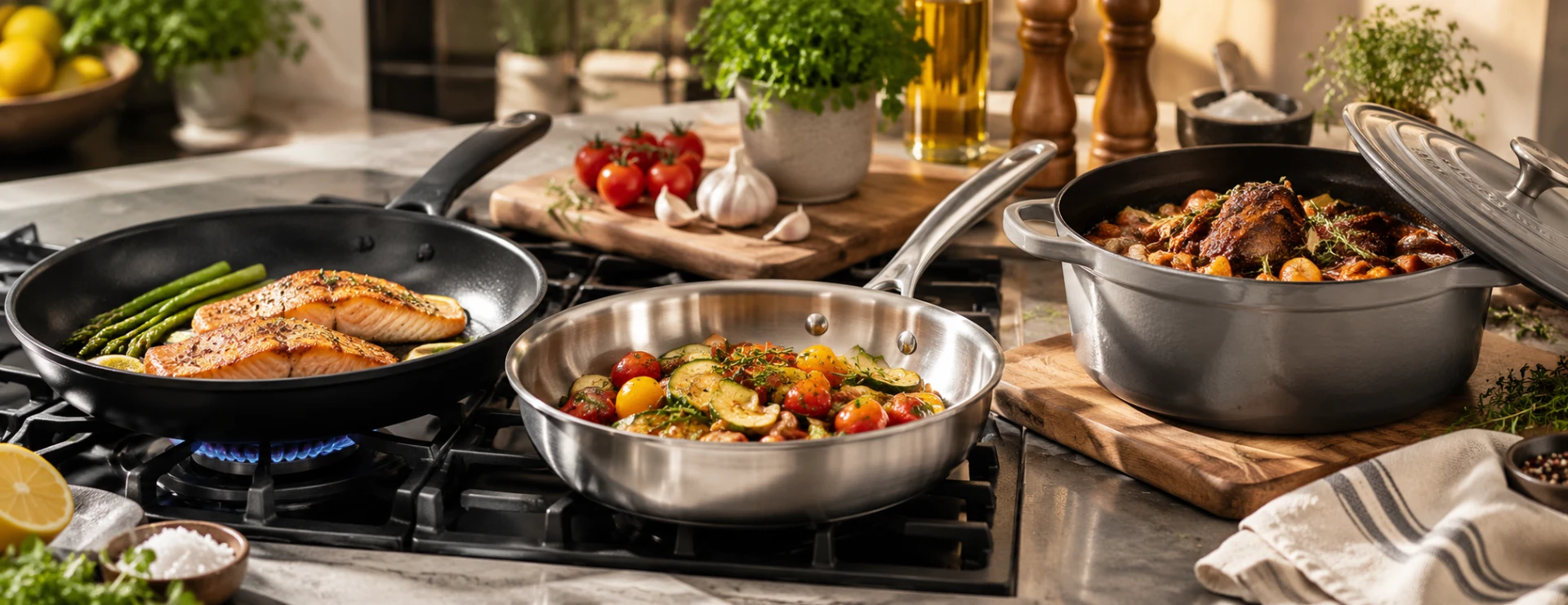
People ask us which cookware material is best. It is the wrong question — a little like asking which knife is best. Each material does something the others cannot, and the useful answer is which three pans belong in a kitchen rather than which one wins.
Non-stick exists so that food releases. That is the whole proposition, and nothing else does it as well. Eggs, pancakes, crêpes, delicate fish fillets — these are the things a non-stick pan handles gracefully and every other pan handles nervously.
The trade-off is that non-stick does not brown as aggressively as bare metal and the coating is a consumable. Treated well — moderate heat, soft utensils, hand washing — a good pan lasts years. Treated badly it lasts months. Cast-aluminium pans with a thick, hard-wearing coating are the ones we see come back least.
Stainless is what you want when you are after colour. Meat sticks to it, and that is the point — the browned residue left behind is flavour, and a splash of wine or stock lifts it into a sauce. A non-stick pan gives you nothing to deglaze.
Look for a clad or multi-ply base rather than a thin disc; it heats more evenly and warps less. Stainless is also the only one of the three that is genuinely indifferent to abuse: metal utensils, high heat, the dishwasher, a scourer when something burns on.
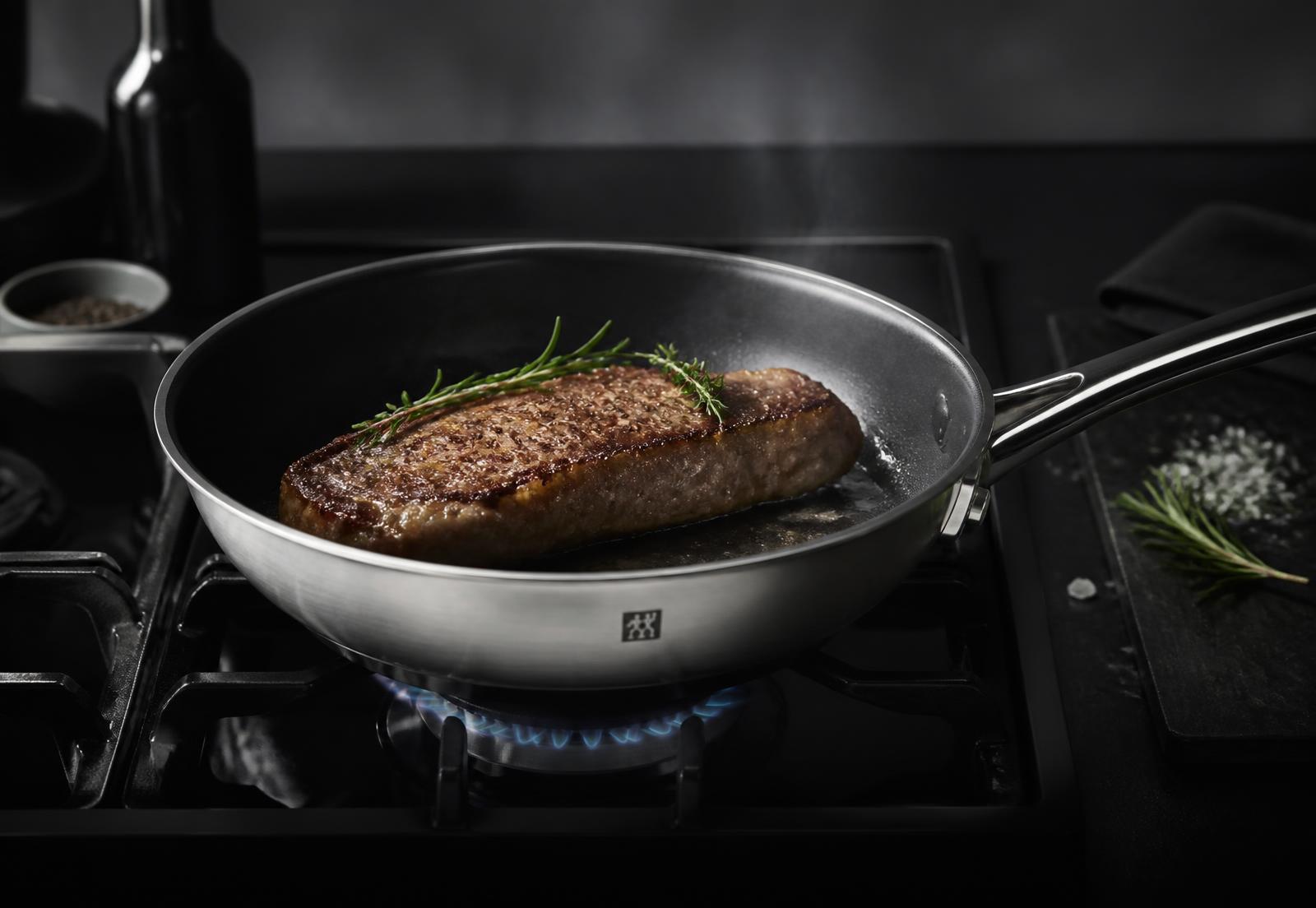
Cast iron is slow to heat and slow to let go. That thermal mass is why a steak keeps searing when it hits the pan instead of dropping the temperature, and why a casserole holds a gentle simmer in the oven for three hours without attention.
Enamelled cast iron needs no seasoning and handles acidic food — tomato, wine, vinegar — without issue. Bare cast iron needs seasoning and a little discipline, and rewards it. Both are heavy. That is not a flaw; it is the mechanism.
Add a saucepan and a stockpot and you have a kitchen that will cook anything. Everything after that is refinement.
Where to look next
How To
First use, heat control, utensils, cleaning, storage and the honest signs that a coating is finished — a practical guide to making non-stick cookware last.
Buying Guides
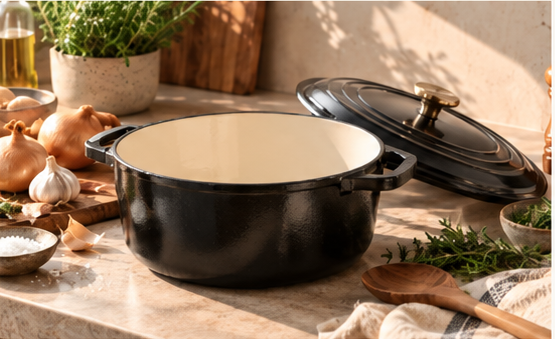
Size, shape and enamel — how to choose a cast iron casserole you will still be cooking in thirty years from now.
How To
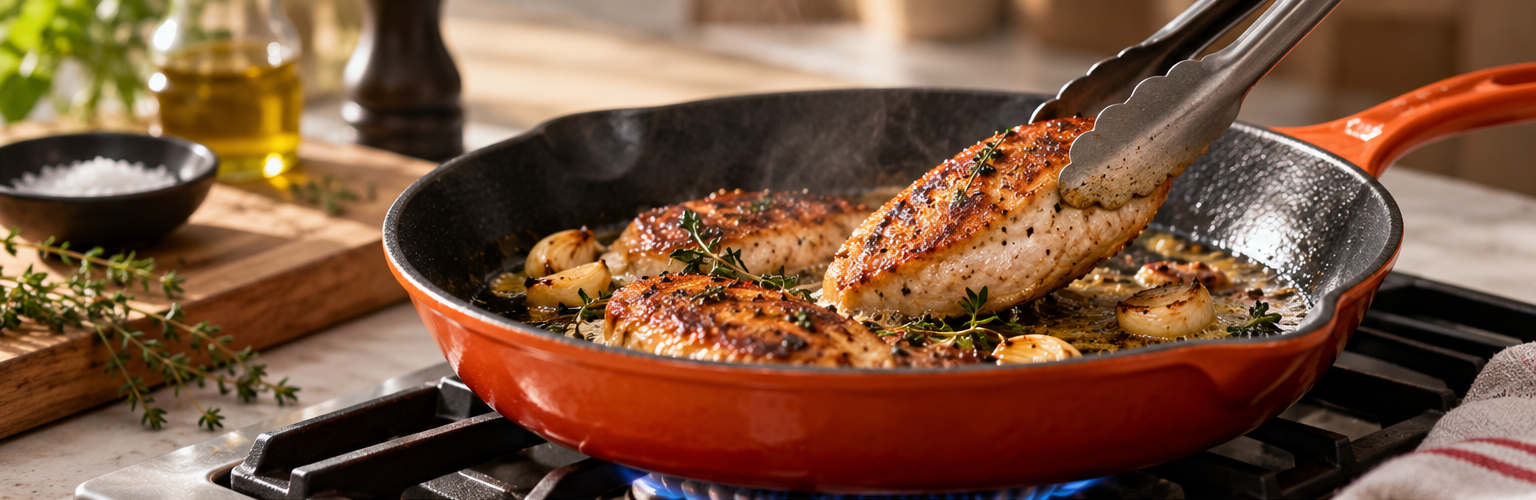
Why food sticks, scorches or stays pale — and how to control preheating, oil, crowding, heat recovery and deglazing in stainless steel, cast iron and non-stick pans.