

Buying Guides
Setting up a first kitchen
A short, honest equipment list for a first flat, a self-catering rental or an Airbnb kitchen — what to buy well, what to buy cheaply, and what to skip entirely.
The most misunderstood coffee maker in the house. Four adjustments fix almost every bitter cup — and a few minutes of care keep the pot brewing well for years.
By Cookin · 22 September 2026 · Updated 24 September 2026 · 5 min read
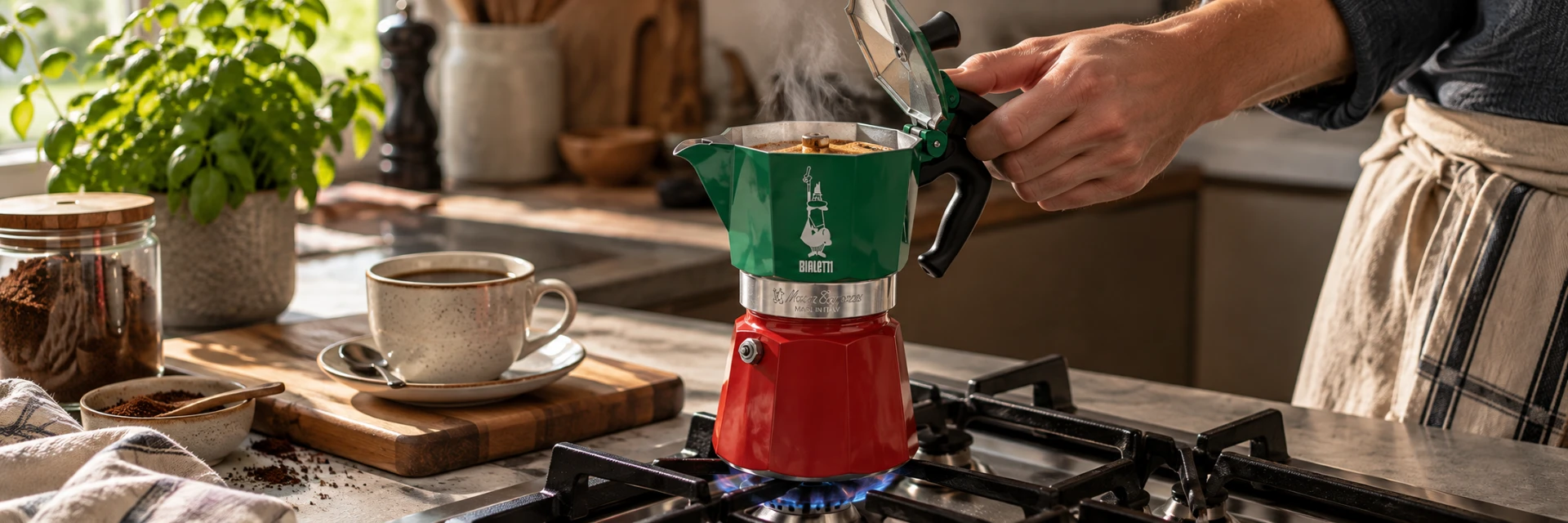
Most people who say they do not like moka pot coffee have only ever had it made badly. The classic mistakes — cold water, hard packing, a fierce flame, letting it run until it splutters — all push the same direction, which is bitter and scorched. Fix those four and the same pot produces something sweet, syrupy and genuinely good. Care matters just as much: old coffee oils, a tired gasket or a blocked filter will spoil a well-made brew. This is general guidance for aluminium and stainless steel stovetop pots; where your pot's own instructions differ, follow the manufacturer.
Fill the base with water that has already boiled, up to just below the safety valve — never above it. This is the single most important change. Cold water means the pot sits on the heat for minutes while the coffee grounds slowly roast above it — that is where the burnt flavour comes from. Hot water gets the extraction going almost immediately. The base will be hot, so hold it with a folded cloth when you screw the top on.
Spoon ground coffee into the funnel basket until it is full, then level it off with a finger and brush stray grounds off the rim so the seal closes cleanly. That is all. A moka pot is not an espresso machine: tamping the bed creates resistance the pot cannot overcome, and the pressure finds its way around the puck instead of through it.
Grind a little coarser than espresso and a little finer than filter — roughly table salt. Espresso-fine grounds clog the filter and can push pressure to the safety valve. If the coffee tastes harsh, go coarser before you change anything else.
Assemble the pot firmly and put it on a medium-low heat. On gas, the flame should stay under the base and never lick up the sides, which scorches the handle and discolours the pot. On a small plate or ring, use one no wider than the base. Leave the lid open so you can watch. After a minute or two the coffee will start to rise in a slow, steady, dark stream. That gentle flow is the target. A violent sputtering jet means the heat is too high.
When the stream turns pale, blond and bubbly, the good coffee is out and what follows is bitter. Take the pot off the heat immediately and run the base under a cold tap for a few seconds to stop the extraction. Then stir the coffee in the top chamber and pour.
Water left in the base or thread is what causes the white, chalky oxidation on aluminium pots. Dry each part with a tea towel and leave the pieces apart for an hour to air out before reassembling. In humid coastal kitchens, and anywhere with hard water, this step matters more than any other.
The rubber or silicone gasket is what holds the pressure. When it hardens, cracks, flattens or lets coffee and steam escape around the join, replace it along with the filter plate. On a pot in daily use that is usually about once a year. Buy the gasket for your pot's exact brand and cup size; a close fit is not good enough. Prise the old one out with a blunt butter knife, clean the groove, and press the new one in evenly.
Store the pot completely dry, either in pieces or loosely screwed together so air can circulate. Tightly closed pots trap moisture and stale smells, and a gasket kept under constant compression flattens sooner. If the pot has not been used for a while, rinse it and brew a pot to discard before drinking.
A moka pot is simple and long-lived. Gaskets and filter plates are consumables, and replacing them solves most leaks and weak brews. Replace the whole pot if the base is cracked or warped, the thread is stripped so it will not seal, the safety valve is damaged, or the aluminium is deeply pitted on the inside. A handle that has worked loose can often be tightened; one that has melted or cracked makes the pot unsafe to lift when hot.
Where to look next
Buying Guides
A short, honest equipment list for a first flat, a self-catering rental or an Airbnb kitchen — what to buy well, what to buy cheaply, and what to skip entirely.

Buying Guides
What each cookware material is genuinely good at, where it fails, and the three-pan combination that covers almost every kind of home cooking.

How To
Choosing the right glass for the job, washing and drying without clouding, avoiding thermal shock and chips, and storing glassware so rims and stems survive — a practical guide for South African homes.