

Cookin Edits
The braai table
A Cookin edit on the South African braai as an afternoon rather than a meal — the timing, the table, and the handful of pieces that make it effortless.
Most glasses are lost to thermal shock, crowded cupboards and the wrong wash — not to use. A few habits keep everyday tumblers, wine glasses and carafes clear, bright and chip-free for years.
By Cookin · 26 September 2026 · 5 min read
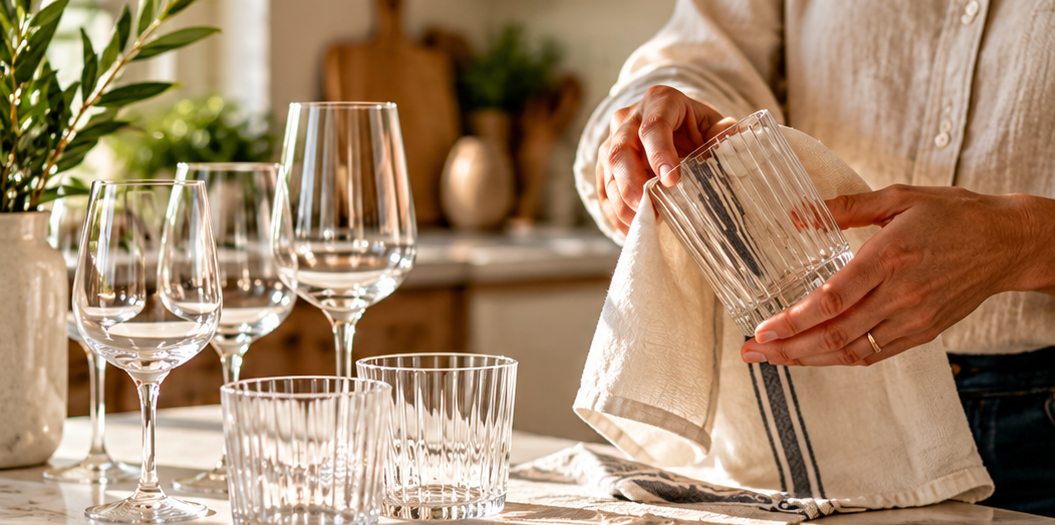
Good glassware rarely wears out — it breaks, chips or goes cloudy long before its time, usually because of how it is washed, dried and stored. This guide covers the everyday habits that keep drinking glasses, wine glasses, jugs and carafes looking clear and lasting longer. It is general guidance; where a manufacturer's own care instructions differ, follow those.
Glass cracks when one part of it heats or cools much faster than the rest. Pouring boiling water into a cold glass, rinsing a hot glass under cold water, or moving a glass straight from a hot dishwasher to a cold shelf can all cause a sudden crack — sometimes immediately, sometimes as an invisible stress fracture that fails later.
Run a fingertip lightly around rims and stems when you wash. A chipped rim is a cut risk and a weakened edge that will chip further; a cracked or starred base can fail without warning. Retire chipped and cracked glasses from drinks use — a chipped tumbler can still hold pens or tealights, but it should not touch anyone's mouth.
Many everyday glasses are dishwasher-safe, and some outdoor drinkware is made specifically for it — check the product's own guidance first. Where you do use a dishwasher: space glasses so they cannot knock each other, keep stems secure in the rack, use the correct dose of detergent and rinse aid, and choose a gentler cycle for anything delicate. Fine crystal, hand-painted or gilt-edged glassware and most decanters are best washed by hand. Repeated harsh dishwasher cycles are the most common cause of permanent cloudiness.
Two different problems look alike. Water spots and a white mineral film are limescale left behind when water evaporates — common in hard-water areas — and they wipe or soak off. True cloudiness or etching is the glass surface itself being worn away by harsh detergent and hot cycles, and it cannot be reversed.
Dry glasses straight after washing with a clean, lint-free tea towel or a microfibre glass cloth. Hold stemware by the bowl while polishing — never twist the bowl against the stem. For a final shine, hold the glass over the steam from a just-boiled kettle for a few seconds, then polish. A cotton or linen cloth that has been through fabric softener will smear rather than polish, so keep one cloth for glassware only.

Replace a glass when the rim is chipped, the base is cracked or starred, or the surface is so etched it stays dull after a vinegar test. Outdoor drinkware that has gone deeply scratched or cloudy is also due for replacement — scratches harbour residue that washing won't shift. Everyday glasses are inexpensive to replace one at a time; there is no need to retire a whole set because a few pieces are past their best.
Wash glasses first, dry them straight away, keep hot and cold shocks apart, and store rims and stems with room to breathe — that is the whole routine, and it is what keeps a set of glasses clear and complete for years.
Where to look next
Cookin Edits
A Cookin edit on the South African braai as an afternoon rather than a meal — the timing, the table, and the handful of pieces that make it effortless.

Buying Guides
A short, honest equipment list for a first flat, a self-catering rental or an Airbnb kitchen — what to buy well, what to buy cheaply, and what to skip entirely.

How To
Choosing the right utensil for each pan, heat limits for silicone and nylon, washing and drying wooden spoons, dishwasher guidance, storage, and when to replace spatulas, spoons, tongs and whisks.