
How To
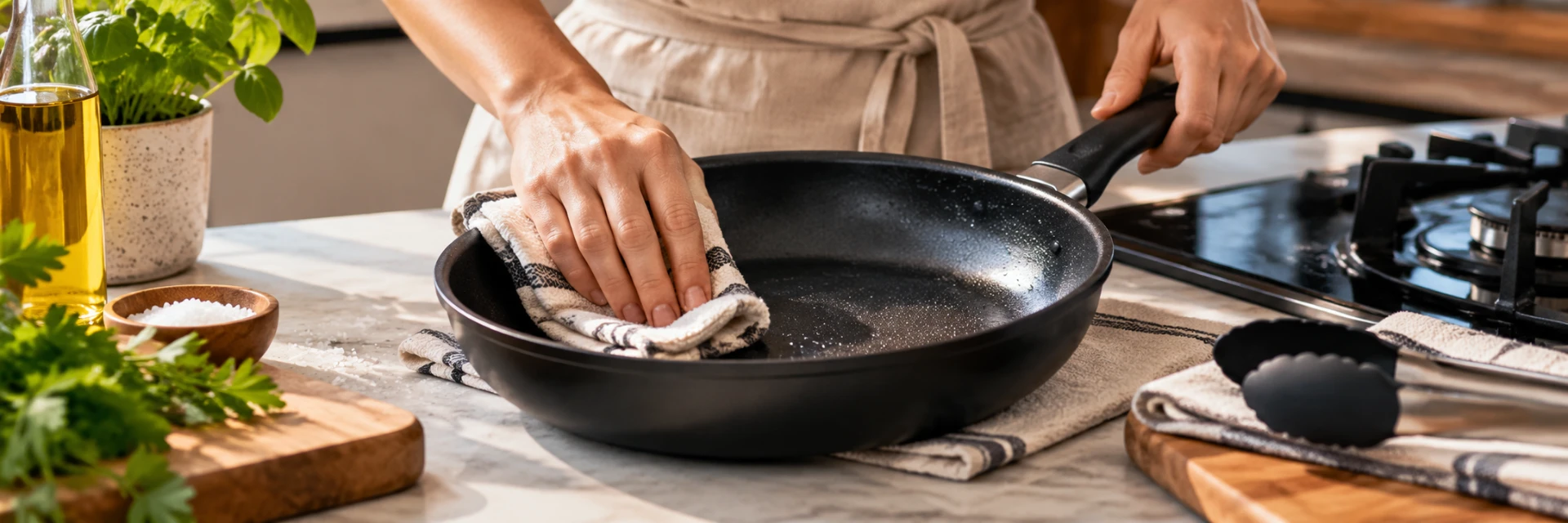
How to care for non-stick cookware
First use, heat control, utensils, cleaning, storage and the honest signs that a coating is finished — a practical guide to making non-stick cookware last.
Low sides, even heat and a surface that releases cleanly. Get the temperature and the first crêpe right, look after the surface, and a crêpe pan earns its place well beyond pancake day.
By Cookin · 24 September 2026 · 4 min read
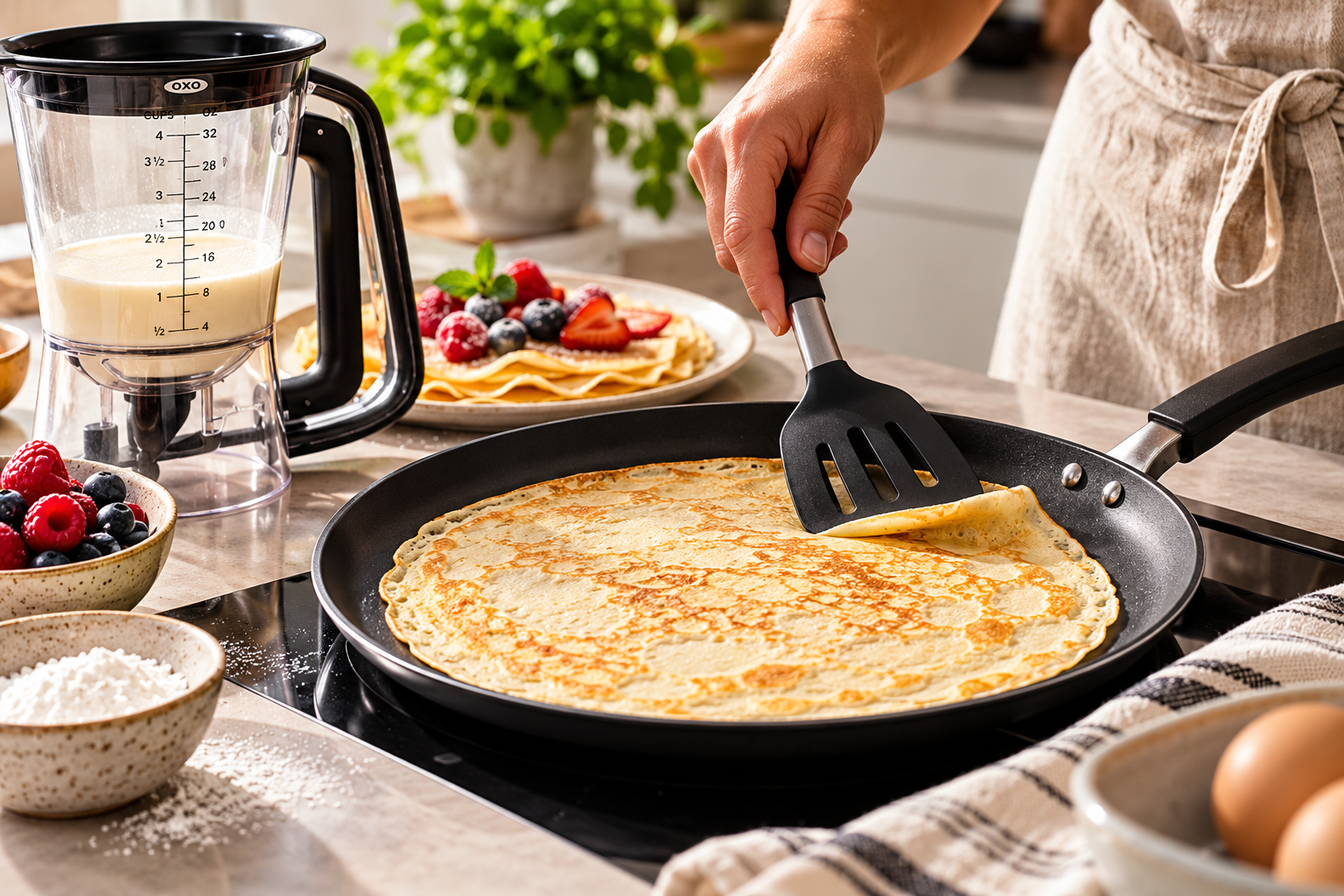
A crêpe pan is a frying pan with the walls almost taken away. The low, flared rim lets you swirl batter thin and slide a turner underneath without fighting the sides, and the flat base spreads heat evenly across the whole surface. It is just as good for flapjacks, omelettes, rotis, tortillas and warming wraps. This guide covers the three surfaces you are likely to own — PTFE non-stick, ceramic non-stick and seasoned carbon steel. Where your pan's own instructions differ, follow the manufacturer.
Almost every crêpe problem is a heat problem. Preheat the pan on medium for two to three minutes so the whole base is evenly hot, not just the centre. Test with a drop of water: it should sizzle and skitter, not vanish instantly or sit still. On gas, use a burner no wider than the base. On a small electric plate, give the pan a little longer. Keep non-stick and ceramic pans off high heat altogether — it shortens the life of the coating and is never needed for crêpes.
Wipe the surface with a thin film of butter or neutral oil using folded kitchen paper before the first crêpe, then again every two or three crêpes. Too much fat fries the edges lacy and uneven; too little on carbon steel and the first crêpe sticks. Avoid aerosol cooking sprays on non-stick and ceramic: the propellants and lecithin leave a sticky residue that builds up and spoils the release.
For thicker pancakes and flapjacks, lower the heat slightly, pour without swirling, and turn when bubbles break on the surface and the edges look set.
Use silicone, nylon or wooden turners on non-stick and ceramic pans. Metal spatulas, whisks and knives scratch coatings, and scratches are where sticking starts. Carbon steel will take a metal palette knife, but a gentle hand still protects the seasoning. Never cut crêpes or pizza in the pan.
Dry immediately with a tea towel. Carbon steel is best dried over low heat for a minute, then given the lightest wipe of oil while warm — in humid coastal kitchens this is what keeps rust away. Store pans hanging, or stacked with a cloth or felt pan protector between them so the next pan's base does not scratch the surface.
Carbon steel can almost always be restored: scrub and re-season, and it will be as good as before. Coated pans cannot be recoated at home. Replace a non-stick or ceramic crêpe pan when the coating is visibly scratched through, flaking or blistering, when food sticks despite correct heat and a clean surface, or when the base has warped so the pan rocks on a flat hob or batter pools to one side.
Where to look next
How To
First use, heat control, utensils, cleaning, storage and the honest signs that a coating is finished — a practical guide to making non-stick cookware last.
How To
Seasoning, heat control, oils, cleaning, drying, rust, acidic food and storage — a practical guide to keeping bare and enamelled cast iron cooking well for decades.

Recipes
A provisional South African breakfast and brunch recipe for four, with boerewors, eggs, mushrooms, tomato-and-bean relish and a practical cooking sequence.