A matched set is good value only when you will use most of what is in it. Here is how to tell whether a set suits your kitchen, or whether a smaller kit built one knife at a time will serve you better.
By Cookin · 24 September 2026 · 5 min read
Buy a set when most of the knives in it match jobs you do every week and its storage suits your kitchen. Build your own kit, one knife at a time, when your needs, preferences or budget are still settling. That is the whole decision. The rest of this guide is about working out which side of that line you are on.
This is not a guide to knife shapes or to choosing a single chef's knife. If you want to know how a santoku differs from a chef's knife, read our guide to kitchen knife types. If you are weighing blade length, weight and handle feel, start with our chef's knife guide. Here, the question is simply how to buy.
Start with jobs, not piece count
Before looking at any set, list what you actually cut in a normal week. Onions, vegetables and herbs. Fruit and small trimming jobs. Crusty bread. The occasional roast or braai meat. Each recurring job needs a knife; jobs you do twice a year usually do not justify a dedicated blade.
Then compare that list with what a set contains. A set is a bundle of decisions someone else has made for you. It is good value when those decisions match yours, and poor value when half the block sits unused.
What a useful small set covers
Most home kitchens run on a short core. A small set that covers it well is often more useful than a large one that adds specialists you will rarely reach for.
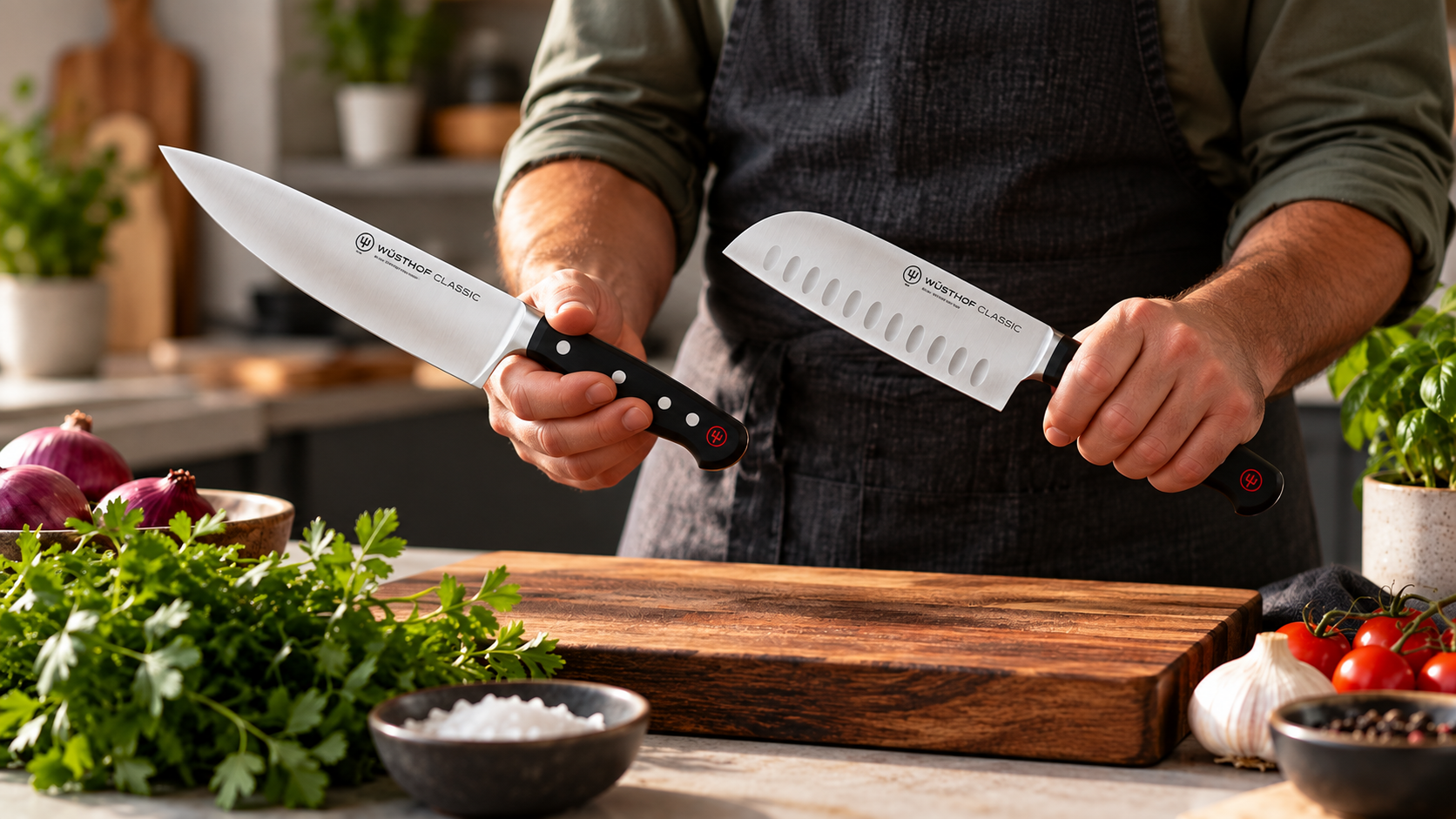
An all-purpose blade: a chef's knife or santoku for most chopping, slicing and dicing.
A paring knife for small, in-hand and precise work.
A bread knife, if you buy crusty loaves or slice tomatoes and cakes regularly.
Optionally, a utility knife for mid-sized jobs, sandwiches and trimming.
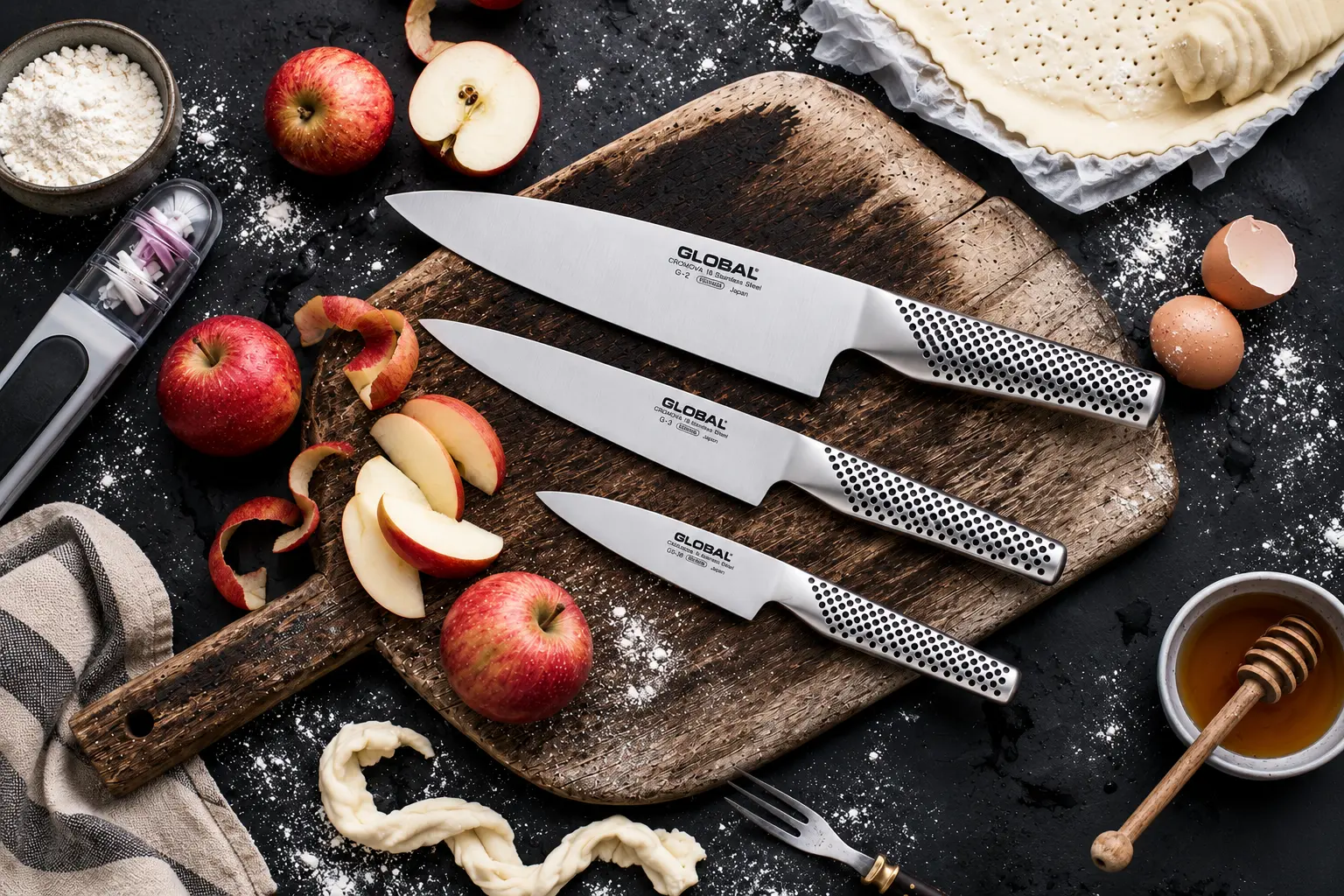
A small set built around a chef's knife, a utility knife and a paring knife covers most daily prep.
Why “seven piece” may not mean seven knives
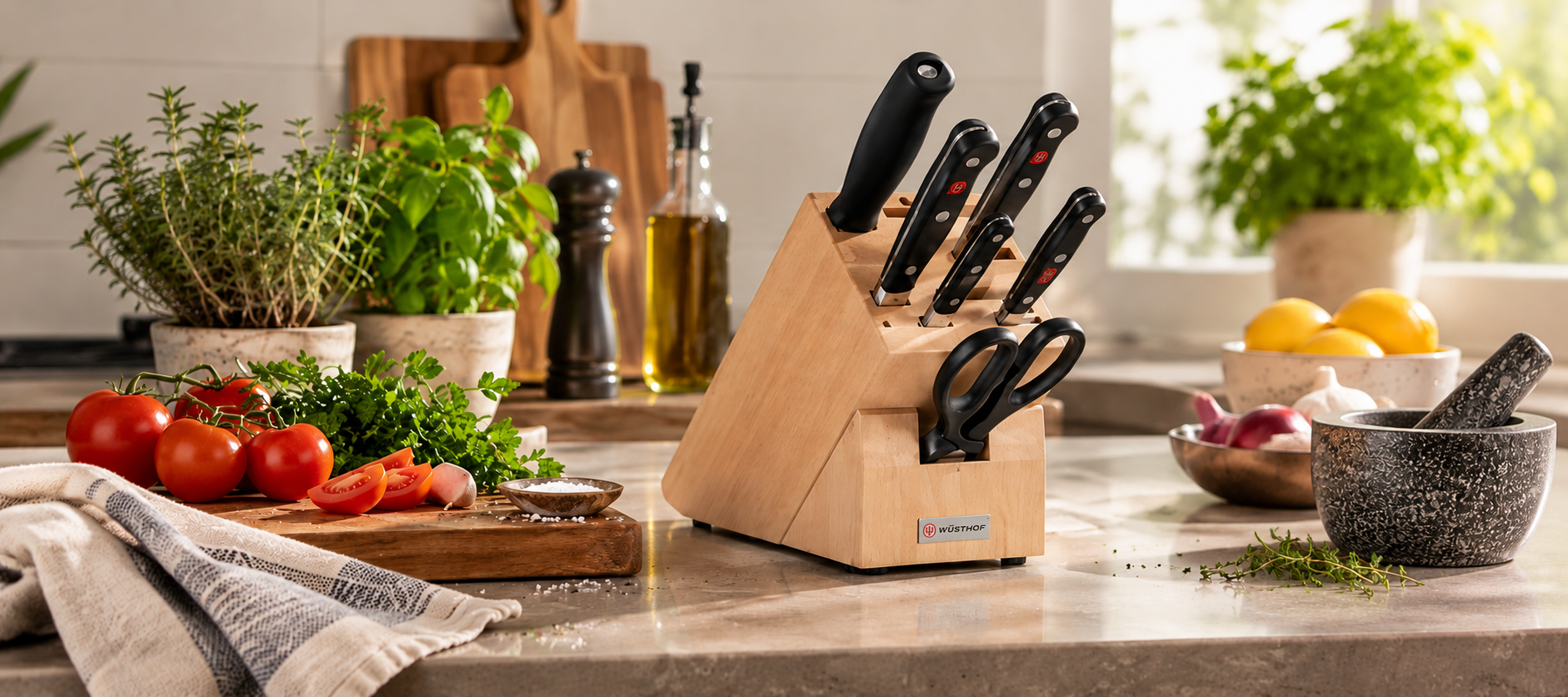
Piece counts are not knife counts. The block itself, a honing steel and a pair of kitchen scissors are all commonly counted as pieces. A “five piece” block set may hold four knives and a steel; a “seven piece” set may hold five knives, scissors and the block.
None of that is misleading if you read the contents, and a block, steel or scissors can be genuinely useful. But the headline number tells you very little. Always open the full contents list and count the knives you would actually use.
When a set earns its place
Most of the included knives match jobs you do regularly.
You want every knife to share the same handle, balance and feel.
You need protected storage anyway, and the block suits your counter.
You are setting up a complete kitchen from scratch and want it done in one decision.
It is a gift, where a coherent, ready-to-use set is part of the appeal.
When single knives are better
You would rather spread the cost and buy well, one knife at a time.
You want to try a knife's grip and balance before committing to a whole range.
You prefer mixing shapes, for instance a santoku alongside a Western paring knife.
You already own some good knives and would only duplicate them.
You want to replace or upgrade one knife without affecting the rest.
Counter space is tight and a block would crowd it.
Block set or a set without storage?
Block sets solve storage in one go, but they commit you to a footprint and a fixed set of slots. Measure the counter space and the height under wall cupboards before buying. Check whether the slots will fit knives you might add later; many blocks are cut for the knives they come with.
Only put knives into a block clean and completely dry, so the slots stay dry and hygienic. Sets without a block are more flexible: store them on a magnetic strip, in an in-drawer organiser or with blade guards. What matters is that edges are protected and never loose in a drawer.
Which suits your household?
First flat or first kitchen: one good all-purpose knife and a paring knife, as singles or a two-piece set. Add a bread knife if you buy loaves.
Frequent family cook: a small three- or four-knife set, or a compact block set, is usually well used.
Keen baker: make sure a bread knife is included, or buy one separately; a paring knife helps with fruit and pastry.
Regular roast or braai host: a set that includes a carving knife is worth it, otherwise add one on its own.
Small kitchen: favour a short set without a block, stored on a magnetic strip or in a drawer organiser.
Established collection: buy singles to fill specific gaps rather than a set that duplicates what you own.
How to compare value
Dividing a set's price by its piece count flatters large sets. Instead, work out what the knives you would actually use would cost bought individually, then add anything you genuinely need, such as storage or a honing steel. If the set costs less than that, it is good value for you. If it only wins because of knives you would not use, it is not.
Prices and promotions change, so compare like with like on the day you buy, using the contents lists rather than the headline.
If you are still unsure
Start with one all-purpose knife that feels right in your hand, and use it for a few weeks. Add a second knife only when a recurring gap shows up: fiddly small jobs, squashed bread, uneven roast slices. A kit built this way contains nothing you do not use, and you can still choose a set later once you know what you want from it.
Looking after whichever you choose
Sets and singles need the same care. For washing, drying and storage, see our guide to caring for kitchen knives; for honing and sharpening, read keeping a knife sharp.